The Calanques between Marseille and Cassis – rugged beauty on the Mediterranean Sea

Where the sea, cliffs and silence meet

The sun shines on the water, crickets sing in the distance and the smell of pine and salt fills the air. You are standing on top of a white limestone path, with the deep azure blue sea below you. This is the start of a day in the Calanques – a landscape that impresses.
If you go on holiday to the South of France and stay in a holiday home in Provence, you can reach the Calanques within an hour. From your holiday park in Provence or luxury holiday home in the South of France,  it is only a short drive to one of the most impressive nature reserves in the country. The Calanques form a world where sea, rock and silence meet. You will not find rows of deckchairs or busy promenades here, but bays that still feel like pure nature.

Our holiday parks in Provence        Our holiday homes in Provence

What are the Calanques and how were they formed?

The Calanques are narrow coves between steep limestone cliffs, carved out by sea and rain. Their name comes from the Provençal calanco, which means "deep valley". In total there are more than twenty Calanques between Marseille and Cassis.
Many years ago this area was a shallow sea. The erosion of limestone and the lowering of the water level created deep gorges that now fill with the Mediterranean Sea. The result: white-gray rock walls, turquoise bays and pines clinging to the slopes. Together they form the Parc National des Calanques, the only national park in Europe that protects land and sea. The flora and fauna are beautiful: pine trees, thyme, goats, seagulls, dolphins and countless fish live side by side here.

Where exactly are the Calanques?

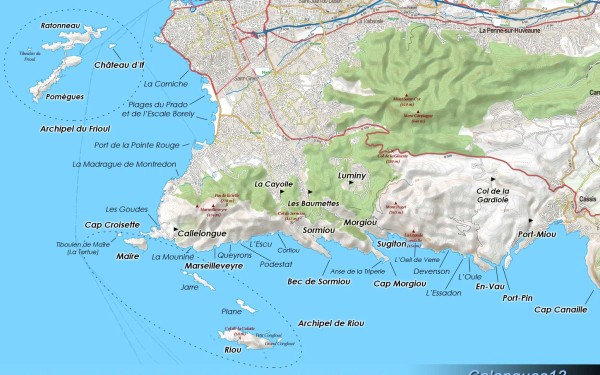
The Calanques are located on the Mediterranean Sea, between Marseille and Cassis in Provence – Côte d'Azur. This stretch of coast is about 20 kilometres long and consists of a succession of bays, cliffs and small beaches.
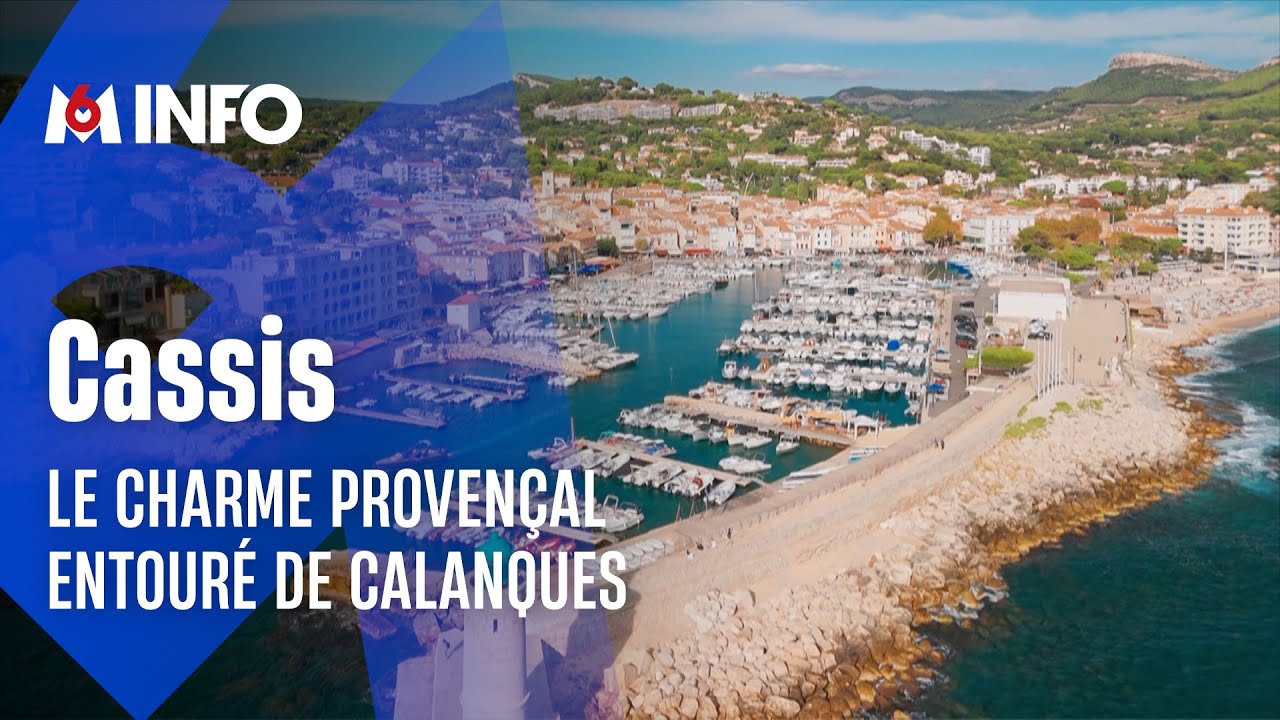
Cassis is the charming starting point of many hikes and boat trips. From Marseille, you can reach the Calanques via Luminy or Les Goudes. Those staying in a holiday villa in the South of France have this unique piece of nature at their fingertips.

Are the Calanques free to visit?

Yes, the Calanques are free to visit. The Calanques National Park on the Mediterranean coast is a public nature reserve without an entrance fee. However, safety rules do apply in the summer months (1 June to 30 September) due to fire hazards.

When the heat increases, the park may be temporarily closed. However, you can still visit the area by boat or kayak, a wonderful way to admire the bays from the sea.

Accessibility and the flag system

To properly inform visitors, the park uses a simple flag system:

  • 🟢 Green: freely accessible.
  • 🟡 Orange: limited access, usually only until 11:00 am.
  • 🔴 Red: closed due to fire hazard.

You can find the current status via the official app "Mes Calanques" or on the website calanques-parcnational.fr. The app also offers maps, walking routes, information about animals and plants and practical safety advice.

Swimming, caves and viewpoints

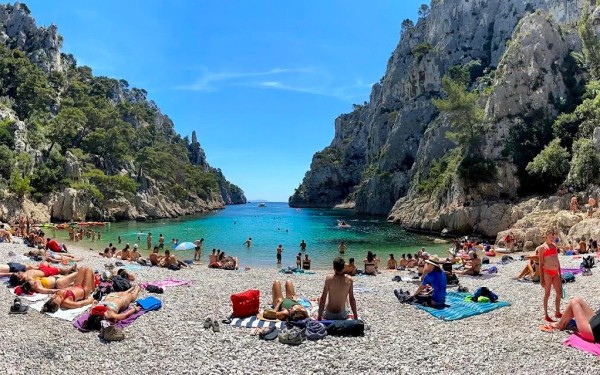
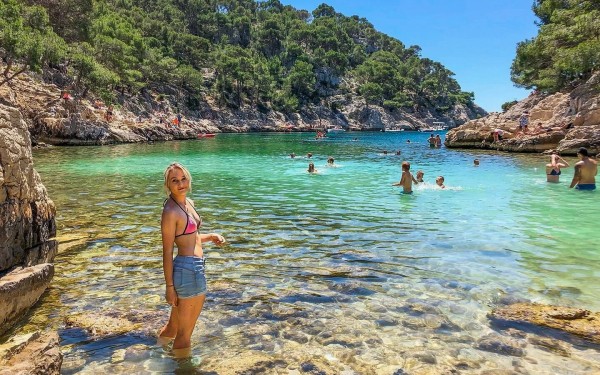
Swimming in the Calanques is an experience you won't soon forget. The water is crystal clear and has a deep blue tint.
Most bays have pebble beaches, so it is recommended to wear water shoes.

There are several caves along the coast, such as the Grotte de l'Oule and the Trou du Souffleur. Some of them can be reached by swimming or by kayak.

Well-known viewpoints are Belvédère de Sugiton and Belvédère d'En-Vau. Here you can look out over the jagged coastline of Provence – a photographer's dream.

The most beautiful Calanques between Marseille and Cassis

1. Calanque de Sormiou – family-friendly and picturesque

The Calanque de Sormiou is one of the most accessible bays and popular with families. The road to it leads along a winding path through pine forests and offers a beautiful view of the sea. Below is a small fishing port with boats and a beach with fine sand.
In the port you can swim, snorkel and have lunch at the authentic restaurant Le Château. The shallow water makes it safe for children.

Viewpoint tip: hike to Cap Redon for a spectacular panorama of the bay.

2. Calanque de Port-Miou – the gateway

The Calanque de Port-Miou is located right next to Cassis and is the only cove that you can reach by car. It is an elongated inlet where sailboats are moored at the jetty.
Many hiking trails to other Calanques start from here to the other. The walk along the quay offers beautiful views of the sea. In the evening, the sky turns orange above the white rocks – an unforgettable sight.

3. Calanque de Port-Pin – small and family-friendly

The Calanque de Port-Pin is only a 20-minute walk from Cassis. The white pebble beach and the clear water make this a favourite spot for families. Pine trees provide natural shade.
Arrive early in the morning to enjoy the tranquillity and beautiful light effects on the water.

4. Calanque d'En-Vau – The hidden gem

Between Port-Miou and Port-Pin lies the famous Calanque d'En-Vau. This narrow bay with high cliffs can only be reached on foot or by boat. The hike from Cassis takes about 2 hours and goes over rocky terrain.
Below, a fairytale place with emerald green water awaits. It is the ideal location for a picnic or quiet swim.

Viewpoint tip: the Belvédère d'En-Vau above the bay offers a phenomenal view for photos.

5. Calanque de Morgiou – authentic fishing atmosphere

Calanque de Morgiou is located a few kilometres from Calanque de Sormiou. The narrow road winds between pine trees and cliffs until you reach a small harbour. Fishermen used to live here; Now this place is popular among divers and kayakers.
Grotte Cosquer, an underwater cave with prehistoric drawings, is located nearby. The original cave is not accessible, but you can find a beautiful reconstruction in the Musée Cosquer Méditerranée in Marseille– a great day out during your holiday in the south of France.

6. Calanque de Sugiton – rough and spectacular

The Calanque de Sugiton is perhaps the most photogenic. From the university grounds of Luminy, you can walk to the Belvédère de Sugiton viewpoint in about 45 minutes. From here you can see two small bays surrounded by white rocks and deep blue waters.
The descent down is steep but worth the effort. There is a pebble beach at the bottom where you can do water sports such as swimming or snorkelling. There are no facilities, so bring plenty of water and sun protection.

Calanques 7 Marseille Cassis uitzicht vakantie Frankrijk luxe villa vakantiepark Provence Middelland

Why the Calanques are also perfect for families

Although some hiking trails to Calanques are challenging, there are plenty of places that are excellent for families with children. The Calanque de Sormiou and Calanque de Port-Pin are ideal for families thanks to the soft beach, calm waters and short hiking trails.
Children can play safely, spot fish or have a picnic in the shade of the pine trees. Combine a trip to a Calanque with a visit to one of the markets in Provence. You can find an overview on the page with local markets near your holiday home.
When you return to your holiday home by the Mediterranean Sea after a day in the sun, you will experience what makes the South of France so special – freedom, beauty and tranquillity.

The Best Boat Tours from Cassis

One of the most beautiful ways to explore the Calanques is from the water. In Cassis, boat trips depart daily to the Calanques – ranging from short trips of 45 minutes to longer excursions of 2 hours. You will see the impressive cliffs, sail past Calanque de Port-Miou, Port-Pin and En-Vau, and hear more about the history of this special nature reserve from the guide.
For families, a boat trip is a relaxing alternative to hiking, and thanks to the clear waters, the underwater life is clearly visible. Book your trip at the port of Cassis or online in advance through the local touring companies.

More things to do in the Parc National des Calanques

The park offers more than just hiking and swimming. Other popular activities include:

  • Kayaking: Explore the bays from the sea and discover secret beaches.
  • Diving and snorkelling: The underwater world is rich in coral, fish and starfish.
  • Rock climbing: The limestone cliffs are a climber's paradise.
  • Hiking: There are over 160 km of marked trails.
  • Dolphin watching: In the early morning dolphins are sometimes visible in the open sea.
  • Photography: The white rocks and the blue of the sea make for beautiful images.

After such an active day, it is wonderful to come home to a luxury villa in Provence – Côte d'Azur or holiday villa in the South of France. From your accommodation at FranceComfort, you can easily visit the Calanques.
Take a look at our holiday parks in Provence and choose a stay that suits your needs – peace, comfort and sunshine at your fingertips. For inspiration about other tourist regions in France, see the pages Holidays in Dordogne or Holidays in Poitou-Charentes.

Practical tips for your visit

1. Preparation and safety

  • Wear good walking shoes with profile.
  • Bring plenty of water (at least 1.5 litres per person).
  • Use sunscreen and wear a hat.
  • Check the flag system via the app.

2. Best time to visit

The months of April to June and September to October are ideal. The weather is pleasant and the park is quieter than in July and August.

3. Accessibility

  • By car: Parking near Port-Miou or Luminy.
  • On foot: Several hiking trails connect the bays.
  • By boat or kayak: Excursions depart daily from Cassis.

Frequently asked questions about the Calanques

1. How many Calanques are there in total?
There are more than twenty Calanques between Marseille and Cassis, each with its own charm.
2. Are the Calanques free to visit?
Yes, admission is free. Parts of the Calanques can temporarily be closed, however, if there is a high fire risk.
3. Can I visit the Calanques with children?
Certainly. Sormiou and Port-Pin, in particular, are family-friendly.
4. How do I check if the park is open?
Via the Mes Calanques app  or the website www.calanques-parcnational.fr.
5. Can I swim or have a picnic there?
Yes, you can. Just make sure you don't leave any rubbish behind – the park is a protected nature reserve.

Back to the overview