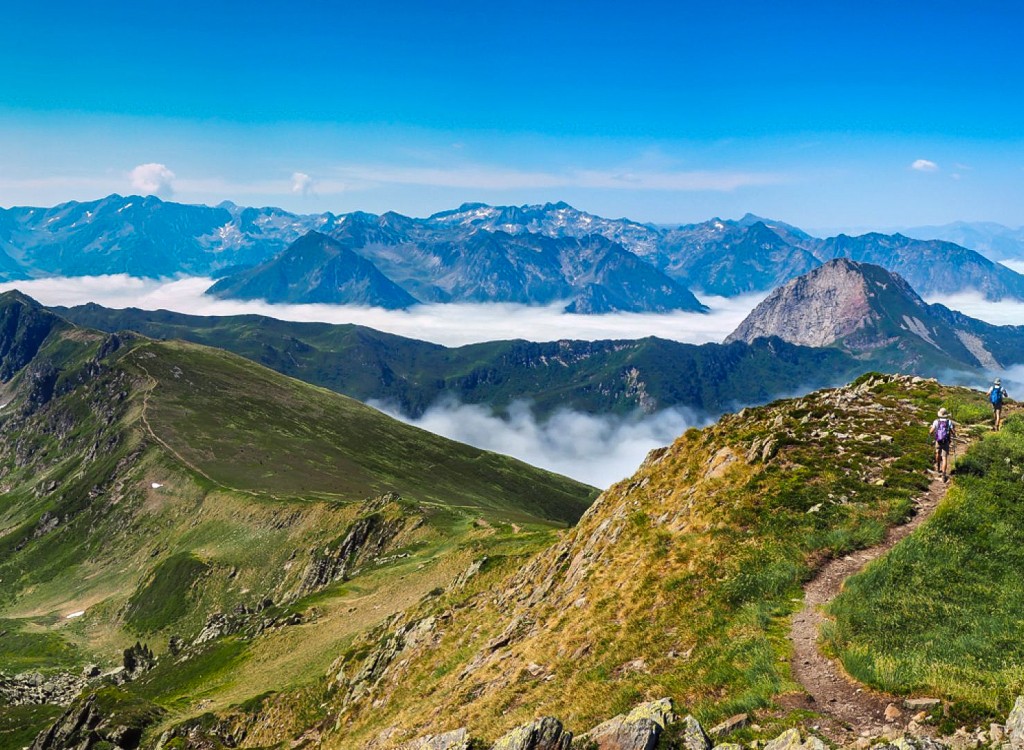
Hiking in France: routes, regions and experiences from a FranceComfort holiday park

Hiking in France: a natural part of your holiday

During your stay in France, you will undoubtedly go on many hikes. These might be planned hikes lasting a few hours through the beautiful countryside or a visit to a picturesque village.
That’s precisely the charm of hiking in France. The landscape is perfect for those who like hiking. The paths follow the contours of the landscape and the networks of walking routes are well coordinated. Whether you are staying in one of the FranceComfort Holiday Parks or in a detached house in the region, hiking adapts to your own pace. Those who choose a holiday home from FranceComfort will notice the difference in luxury, comfort and location. You’ll be right in the heart of the region, not on the outskirts. This means a walk often literally starts at the front door of your holiday home. You can find more inspiration for your stay on the page Holiday in France.

Holiday parks in France     Holiday homes in France

Hiking routes in France: how to choose the right route for each region

You can go for a walk that you have planned yourself. But it is often easier to follow the pre-marked routes, usually provided by the local ‘Office du Tourisme’.
In addition to local walking routes, there are also national trails for long-distance walks. In France, there are over 20,000 kilometres of walking routes available.
It is important to be well prepared for every walk. Wear comfortable shoes, bring supplies for blisters, and don't forget the sunscreen. If you plan to go for a longer walk, also make sure to drink enough.

How are the hiking trails marked?

There are various routes in France that are marked with trail markers. These markers consist of stripes in a specific colour that can be found everywhere – on trees, rocks and road signs:

  • Grande Randonnée (GR): These are long-distance walks that criss-cross the region and even span the entire country. You walk from point A to point B. Well-known GRs include the GR10, which crosses the Pyrenees, and the GR5, which runs from Hoek van Holland (NL) to Nice (FR). Domaine de Castellane is situated in this area. The GR routes have a white-red marking. For official information on long-distance routes and markings, please take a look at the Fédération Française de la Randonnée Pédestre (FFRandonnée).
  • Grande Randonnée du Pays (GRP): Another type of long-distance hike is the Grande Randonnée with the addition "du Pays". These are circular hikes. They start and end at the same point. You can recognize these trails thanks to the yellow-red stripes. An overview of national hiking trails and practical information about GR routes can be found via GR® routes in France.
  • Petite Randonnée (PR): This is a relatively short hike, ranging from 2 to 8 hours. These routes are marked with a yellow stripe.
  • A pied en famille: This type is actually part of the PRs and was introduced in 2002. It is a 1 to 3 hour family walk.

Nordic walking

Nordic walking is popular, also in France. You will comeacross Nordic Walkers on all hiking trails. Sometimes you even see entire groups walking by. You can often rent Nordic Walking poles at the local Office du Tourisme.

Wine walking tours

Notably, there are wine walking tours, often organised by the local tourist office. In addition, the wine châteaux themselves also offer walks through their extensive vineyards, which often end with a tasting, the ‘dégustation’, of the estate’s wines. You can find more information about wine regions on our page Holiday homes in a wine region in France.

How are hiking trails in France structured?

Farmers used to make their own paths to reach their fields. Traders took advantage of this to go from village to village, and pilgrims walked over it to cover the long distances. These have now become the hiking trails that holidaymakers walk on from their holiday home in France.
In total, France has more than 20,000 kilometers of officially marked hiking trails. These routes are maintained by local municipalities in cooperation with regional walking associations. The signage is deliberately kept simple: no long texts on signs, but recognizable color markings that can be found everywhere. At junctions, it is sufficient to check briefly whether the marking is correct.

Hiking with children and as a family

Hiking with children in France requires practical choices. Short distances with regular breaks are often better than long hikes. Choose a route with variety and things to see along the way; that makes it much more fun than a boring walk with no variety.
On hot days, children are often keen to stop halfway to have a swim in a small river or play in a stream. This is perfectly possible if you’re walking from Bourg Est - Vigelière or Village des Cigales. It’s also a good idea to check if there are any picnic spots along the route. For your first few walks, don’t start too far from a village, so that you don’t end up in a remote area if anything happens.
In practice, it’s also nice to go for a walk in the morning and do something else in the afternoon.

Hiking in Provence in France

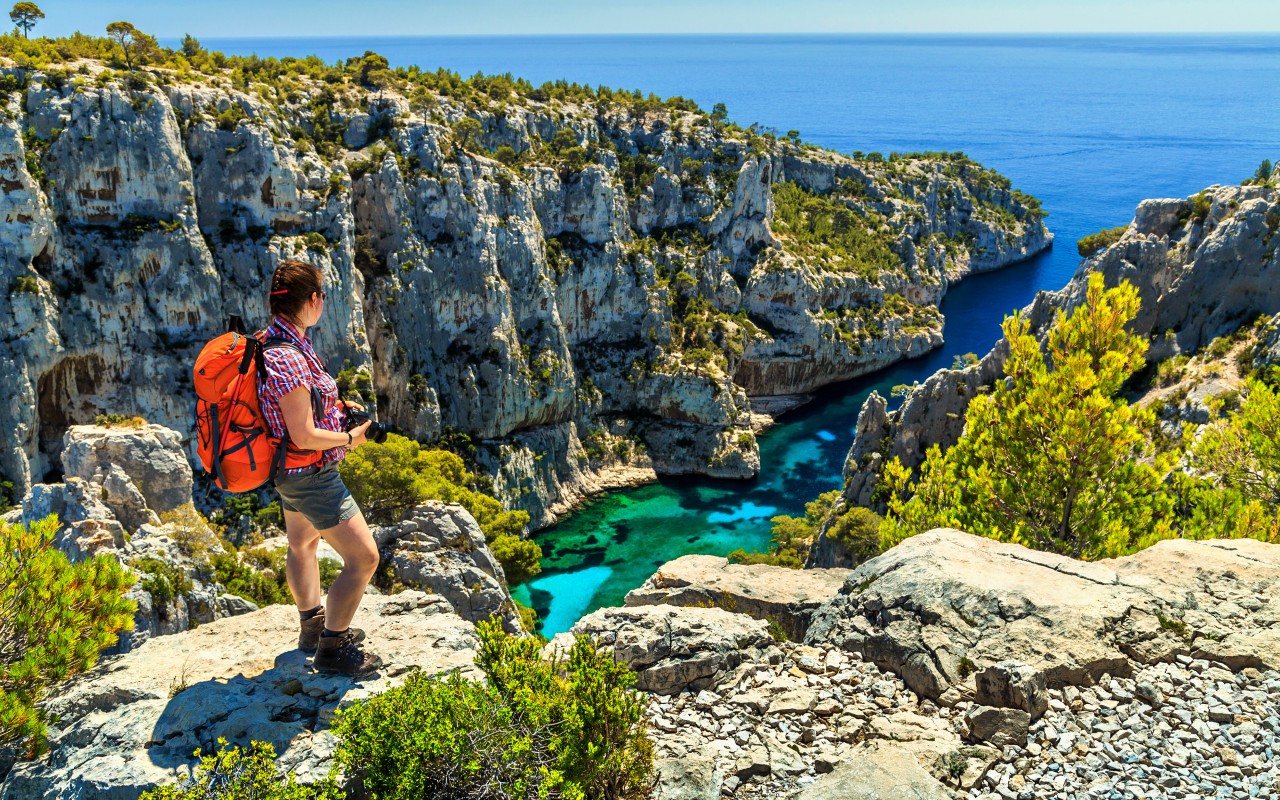
Provence has many different sides to it. Along the coast, paths run high above the sea, with jagged rocks that stand out sharply against the deep blue Mediterranean Sea. Here you’ll find famous Seaside resorts such as Cannes and St. Tropez. A popular route along the coast is the Nietschepath near the picturesque Eze. During this walk, you will be treated to breathtaking views of the Mediterranean Sea of the Côte d Azur. Inland, you will see limestone hills, dry riverbeds, vast plateaus, fragrant lavender fields, and mountains reaching heights of up to 4100 meters. You can also enjoy beautiful walks in the Calanques, or along the coast near Cassis or Antibes.

The climate here is typically Mediterranean; Summers are hot and dry, whilst winters are mild. Most of the rain falls outside the high season. For active hikers, there are routes through the mountains and the impressive rock formations of the Gorges du Verdon. Some well-known routes are the GR4 from Provence to the Atlantic coast, the GR97 – Tour du Luberon, the GR91 – Tour du Mont Ventoux and the GR99 at the Gorges du Verdon.

Those on holiday in Provence and staying in a luxury villa will find that walks often naturally take place in the morning or towards the evening. For more hiking opportunities in this beautiful region, check out Hiking in Provence and Côte d'Azur. And for those who like to combine walking with cycling, there is also Cycling in Provence – Côte d'Azur. Staying in a holiday home in Provence gives you the freedom to adapt your walks to the weather.

Route 1: Sentier Nietzsche (Èze) (± 4,5km, 2h)
This route connects the hilltop village of Èze with the coast. The path is rocky and descends almost without interruption. The Mediterranean Sea remains in view throughout the route. There isn’t much shade, so this route is best walked in the early morning or during spring.

Route 2: Sentier Blanc-Martel – Gorges du Verdon (± 14km, 5.5h - 6.5h)
This route winds through a deep gorge and requires fair amount of concentration. You will encounter narrow paths, tunnels and significant changes in elevation that alternate. The temperature inside the canyon is a lot lower than outside, but due to the length and challenging terrain, this is definitely a full-day trek.

Hiking in the Languedoc in France

The Languedoc is a region of great variety. You can go from vineyards to hilly landscapes in no time, and from open plateaus to impressive gorges. Hiking trails have been laid out all over the vineyards, which will give you the chance to see how the grapes grow during your holiday in the Languedoc. Take regular breaks. Our guests tell us they often do this when they pop into a village where a market with local products is taking place. They have a look around and then settle down on a terrace.

In the lower parts of the region, you will mainly see valleys dotted with charming villages. On the coast of the Mediterranean Sea in the Languedoc you will find both extensive sandy beaches and cozy bays with rugged rock formations. To enjoy those idyllic views, however, you’ll need to tackle a steep climb. The same applies to hiking trails through the Pyrenees. The paths there are often stony and dry, and in the open areas there is a lack of shade.

The climate in the Languedoc is warm, but more changeable than that of Provence. It is cooler in the mountains, whilst in the valleys you may sometimes face intense heat. Those staying in a holiday home in the Languedoc will find that the choice of walking routes can vary from day to day. For more details, you can look at Hiking in the Languedoc and Nature reserves in the Languedoc and Ariège. This region is also excellent for cycling enthusiasts, see Cycling in the Languedoc.

Park manager Holiday Park L'Espinet: What surprises many hikers here is the silence. Even on popular routes, you will be able to not come across anyone for a long time. This gives space and peace, but also requires self-reliance.

Route 1: Pic de Bugarach (± 9km, 4h)
The Pic de Bugarach is the highest point of the Corbières. The climb is quite strenuous, especially when it is hot. The last part is rocky and really requires your attention. At the top, you immediately understand why this route is so popular.

Route 2: Gorges de Galamus (± 7km, 3h)
This route winds through a narrow gorge, close to the river. The shade of the surrounding trees and the cool waters make it an ideal place for hiking, especially on hot days.

Holiday parks in France     Holiday homes in France

Hiking in the Gironde in France

The Gironde is a region where hiking is strongly influenced by the open space and the wind. The landscape here feels open and free, especially compared to many other areas in France. Here you will find extensive pine forests that alternate with dunes, beaches and vineyards. Inland, the forests of Les Landes prevail. Here, straight paths, soft ground and long sight lines determine the rhythm of your walk. But on the coast, the landscape changes completely. The sand, wind and elevation gain mean that even short hikes can be tough.

Along the Atlantic coast there are beautiful hiking trails, such as the one at the bay of Arcachon or at the famous Dune of Pilat. You can also just walk on the beach and enjoy the sea and the view. You can take a walk through the city in Bordeaux while you are at Saint-Émilion between the vineyards. 
You can start a walk directly from the holiday park Château de Salles or first drive a bit by car and then start the walk. The climate in Gironde is temperate, but it can be more unpredictable than further inland. The temperature is often pleasant, but the wind strongly influences how you experience a walk. Therefore, it is wise to adjust your route choice according to the conditions of that day.

Route 1: Forêt des Landes (± 12km, 4h)
This route winds through a vast pine forest. The path is quite flat, but the length does require some perseverance. Due to the constant nature of the environment, you only realize afterwards how far you have walked. This is a route that gives you a sense of peace, precisely because of the repetition in nature.

Route 2: Dune du Pilat – coastal path (± 6 km, 2.5h)
Walking through the dunes and along them offers a completely different experience. The sand makes every step harder, and the view changes with every turn you take. The reward? A beautiful, wide view over the ocean and the forest, along with a refreshing breeze that softens the heat.

Hiking in the Dordogne–Lot in France

The Dordogne–Lot is a fantastic region where hiking is a natural part of your holiday. In the Dordogne, and especially in the Dordogne Valley, you will find about 1,000 kilometers of long hiking trails, including the famous pilgrimage route to Santiago de Compostela. For background information on the pilgrimage routes to Santiago de Compostela, Agence des Chemins de Compostelle is an authoritative source. But that's not all; during your holidays in the Dordogne, there are also countless shorter walks available, totalling over 4,000 kilometres of trails. These routes often start from the central point ‘Le Bourg’ of a village. This is the central spot where the Dordogne market is usually held.

Many holidaymakers consciously choose a holiday home in the Dordogne, often located in a small-scale FranceComfort Holiday Park, in the middle of beautiful nature. The landscape is characterized by gently rolling hills, dense forests, vast fields and serene river valleys. From Domaine de Lanzac you have a beautiful view over the valley.
The Dordogne and the Lot form natural lines in the landscape that are perfect for following on a lovely walk. The climate is pleasantly temperate. Summers are warm but rarely muggy. Shaded spots are always nearby, making longer walks very pleasant. For more inspiration, please check out Hiking in the Dordogne. Many of the hiking trails are also easy to do by bike, see Cycling in the Dordogne and Cycling along the Lot.

Route 1: Circuit de Domme (± 7km, 2 - 2.5h)
This walk starts in the charming bastide town of Domme and winds along the edge of the plateau. The view over the Dordogne valley never ceases to amaze. What many hikers remember is how quickly the hustle and bustle of the village fades once the trail opens up to the vast landscape.

Route 2: Boucle de Beynac (± 10km, 3 - 3,5h)
You will walk through the forest and over open fields, with the Château de Beynac as a clear landmark. The mix of culture and nature makes this route particularly popular. The pace slows down by itself, simply because there is so much to discover.

Hiking in Poitou-Charentes in France

The Poitou-Charentes may be less striking than other regions, but that is precisely what makes a holiday home in the Poitou-Charentes just so appealing. The landscape is predominantly flat with a few gentle hills here and there. It consists of vast fields, swamps such as the Marais Poitevin, and meandering rivers. In these nature reserves, you can spot numerous birds and other animals. Those who want to combine walks with visiting nature reserves and national parks can find information via Parcs Nationaux de France.

On the western side of this region lie the Atlantic Ocean seaside resorts. Here you can walk along the beach or through the dunes.
In the north of this department, you’ll find picturesque vineyards, criss-crossed by walking trails. During your holiday in the Poitou-Charentes, you can walk from one charming village to the next and enjoy a relaxing break on a terrace along the way. Summers are warm but never extreme, making this region ideal for long walks that you won’t find strenuous. For more information, please visit Hiking in the Poitou-Charentes and Nature Reserves in the Poitou-Charentes. You can also enjoy lovely cycle rides in Poitou-Charentes. The cycle paths in the Poitou-Charentes are flat and require little effort.

Guest Fam. van Ommen: What always strikes us in the Poitou-Charentes is that you walk much more consciously here. The beautiful surroundings, the warm sun and the beautiful view invite you to stop regularly. 

Route 1: Marais Poitevin near Coulon (± 8km, 3hrs)
You will walk along the calm waters and the reed beds. The sound around you is muffled, and the distances seem to become less important. Many people who take this route find it a true oasis of peace.

Route 2: Vallée du Thouet (± 11km, 4h)
This route connects small villages along the river. Ideal for combining hiking with a lunch stop along the way.

Hiking in the French Alps in France

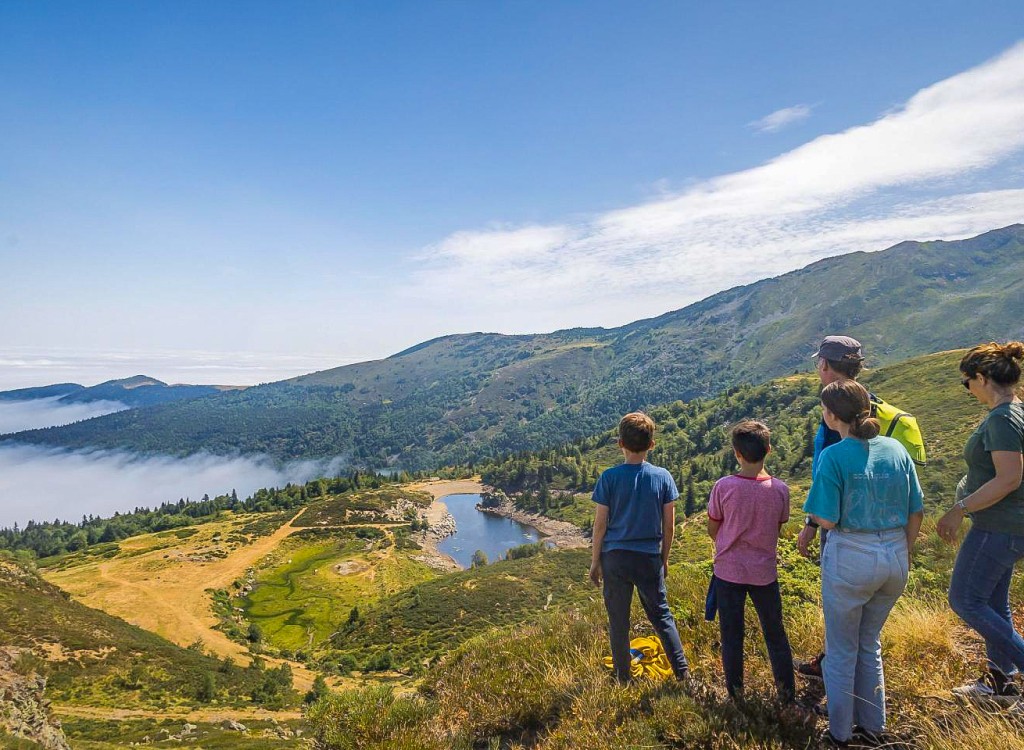
Hiking in the French Alps is not only about the number of kilometers covered, but above all about the altitude of the route and enjoying the journey itself. The landscape is a stunning mix of valleys, slopes, alpine meadows and imposing mountain peaks. The constant alternation between ascents and descents naturally provides plenty of opportunities for a breather.
From AlpChalets Portes du Soleil or AlpResort Portes du Soleil you can embark on challenging hikes through the French Alps. Your effort is always rewarded: the higher you climb, the more breathtaking the views become. If you’d like to make things a little easier on yourself, you can choose to take the cable car to cover part of the route and continue hiking at a higher altitude.

For a walk near water, head to Lake Annecy. You can also enjoy lovely walks around Lake Geneva. What makes the Alps so appealing is that they are stunning in both summer and winter. However, the weather can be more unpredictable than in other areas. Even in summer, it can be chilly in the morning, whilst it can get quite warm in the afternoon. Cloud can also roll in quickly, which means you need to be flexible, especially when staying in an apartment in the Alps with direct access to the Abondance Valley with its hiking trails and ski lifts.

Manager Martine: In the Alps, a five-kilometre walk can easily take up half a day, thanks to the changes in altitude, the stunning views and a picnic along the way.

Route 1: Tour du Mont-Blanc – stage (± 12km, 4h - 5h)
A single stage of this famous route perfectly illustrates what alpine hiking is all about. You’ll walk through beautiful alpine meadows and pass several vantage points where you can really feel the altitude.

Route 2: Lac Blanc (Chamonix) (± 6 km, 3h - 4h)
A fairly short route with a clear destination: the lake. The climb is quite challenging, but the view of the Mont-Blanc massif makes every step more than worth it.

Holiday parks in France     Holiday homes in France

What types of hikes are there in France?

When hiking through France, you’ll soon notice that hikes don’t fit neatly into strict categories. The atmosphere of a route is strongly influenced by the surroundings you find yourself in, and these change constantly. One moment you’re following a path along the coast, where the wind and the sea shape the landscape. The next, you’re in a forest, where the sounds are muffled. For regional tourist information and official route maps, France.fr – France’s official tourism website is a reliable source.

Coast
Along the coast, particularly in the regions of Provence and Gironde, the walks are open and light. The sea is always in view, there is little shade, and the wind plays a greater role than the change in elevation. Vallée de la Ste. Baume and Jardin du Golf are located in this region.

Forest
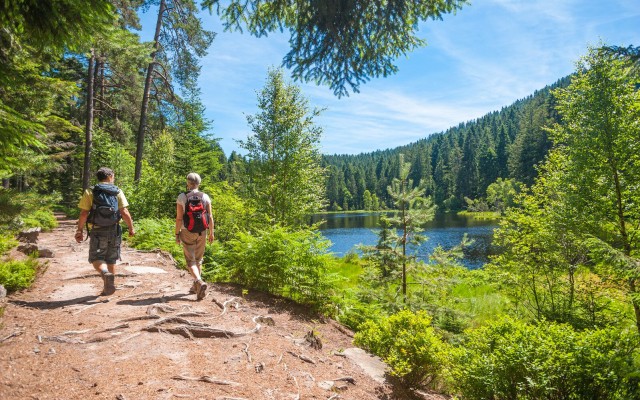
In wooded areas such as the Dordogne and Poitou-Charentes, hiking feels like a sheltered experience. You’ll walk at a more leisurely pace, the ground is resilient, and the temperature fluctuations are less extreme. In Poitou-Charentes, you will stay in Aveneau - Vielle Vigne or Domaine les Forges.

Hills and vineyards
In hilly areas and vineyards, you will find a mix of open spaces and sheltered paths. Here you’ll often walk from village to village, with plenty of opportunities to take a break along the way.

Mountains
Mountain hikes, such as in the beautiful French Alps and the various regions of the Languedoc, require extra attention. This is not only due to the differences in altitude, but also to the constant rhythm of ascents and descents. Breaks occur naturally here. Not because you plan them in advance, but because the terrain simply demands it.

Chapelle abondance 2a omgeving Portes du soleil wandelen Frankrijk vakantie.jpg

What is the weather like in France?

The weather in France can vary considerably, depending on the region and season.In the centre and south of the country, summers are generally hot and dry, with temperatures often exceeding 30 degrees in July and August.
Although it does not rain often during these months, the showers that do fall can sometimes be heavy, but they are usually short-lived. Temperatures usually fluctuate between 15 and 25 degrees, and the landscape appears fresh and green.
Most rain falls in spring, but it is rarely prolonged downpours. Choosing the right time and route depends on the season. In the summer, it is wise to set off early, while in the spring and autumn there is more room for flexibility.

How many kilometers can I walk in France?

Experience shows that this differs per region. As a general guide, aim for the following distances per day:

  • Dordogne & Poitou-Charentes: 8 - 12 km
  • Provence & Languedoc: 6 - 10 km
  • French Alps: 5 - 8 km

More important than distance is duration. Four hours of walking feels comfortable for most people and leaves you with time for other activities.

How do you choose the right hike on the right day?

This is a question that virtually no walking website answers, but it is very important.

Factors that determine your choice

  • Temperature
  • Energy level
  • Your walking company
  • what else you want to do later that day

On the second day of your holiday, everything feels very different than on the tenth day. Your body is not yet used to the heat and the pace of the new environment. In the beginning, we often see people walking too far.
A handy guideline from FranceComfort is: in the first few days, try not to walk more than 70% of what you think you can manage. As the holiday progresses, you will naturally find that you can do more. After a walk, you can relax your muscles in your private swimming pool or the jacuzzi at your villa.

Can I combine hiking with other activities?

In all areas where FranceComfort Holiday Parks operate, hiking and other activities go hand in hand. Days when you don’t feel like walking are perfect for a bike ride or for a visit to an interesting spot. Walking is thus a natural part of your holiday, without a fixed schedule. For more inspiration, you can visit the Cycling holiday in France page.
A complete overview of all regions and accommodations can be found on Regions in France.

Common mistakes when hiking in France

Hiking in France may seem simple, but it is precisely because of this apparent simplicity that things often go wrong. It is not so much a question of fitness, but rather of misjudging the heat, the terrain and the timing.

Starting off too late in hot weather
In hot weather in the South of France, a pleasant morning walk can quickly become unbearable due to the blazing sun and lack of shade. If you set off early, you can walk at a more leisurely pace and have more time for breaks.

Confusing distance with difficulty
Kilometres don’t tell the whole story. The terrain, elevation changes and temperature determine how challenging a route feels. Six kilometres in Provence can be tougher than ten kilometres in the Dordogne.

Not bringing enough water
It is also crucial to take enough water with you. In open areas and mountains, facilities are often scarce. Not having enough water can force you to shorten your route or even turn back. A good guideline is at least half a litre per hour per person in hot weather.

Following the pace of the fastest walker
In groups, the pace can quickly become too fast. Hiking is not about speed, but about finding a comfortable rhythm and enjoying nature.

Not daring to turn around
Don't be afraid to turn back either. Carrying on because you’ve ‘come this far’ can backfire. Turning back in good time ensures you keep the day pleasant and manageable.

Viewing the hike separately from the rest of the day
Don’t forget that a walk that’s too long can disrupt the rest of your day. Often, a four-hour walk fits better into a day’s holiday than a six-hour one.

About This Article

This article was created by FranceComfort travel advisors, based on their own experiences in the region and supplemented with practical tips from guests, park managers and local tourist offices. The content has been put together to help you make better choices during your walking holiday in France, not simply to tick off routes, but to truly experience them.

Practical tips for hiking in France

  • Choose shoes that you have already broken in and that are suitable for the terrain. For wooded and hilly areas, light hiking shoes are often sufficient. In rocky or mountainous areas, shoes with extra grip and support offer more security.
  • Always carry something for minor discomforts. A few blister plasters, a roll of bandage, and a small disinfectant wipe can ensure that a minor irritation doesn’t spoil your walk.
  • Don't forget to bring sunscreen; this is no luxury, even on slightly cloudy days.
  • In humid and wooded areas, insect repellent can be a useful addition, especially in the early morning and towards the evening.
  • Preferably use a hiking map or an app with offline maps, as mobile coverage is often unreliable in remote areas. Check your route and the estimated walking time in advance, so that you are prepared. Maps and topographical information are available from the French National Institute of Geography, IGN France.
  • Fill your backpack smartly: make sure that water is on top, snacks are easily accessible and heavy items are close to your back.
  • Don’t forget to pack swimwear and a towel for a refreshing dip on a hot summer’s day.
  • Remember to take some cash as well as your bank card, as markets and shops in small villages don’t always accept card payments.
  • A light jacket or cardigan can also come in handy in summer, especially in the mountains or in windy weather.
  • Plan your breaks carefully; not just when you’re tired, but also at points that feel natural within the landscape, such as by a bench, a viewpoint or in the shade.
  • Always check the weather before setting off. Pay attention not only to the temperature, but also to the intensity of the sun, wind strength and the chance of thunderstorms, especially in mountainous areas. Adjust your route and start time based on this information. The best way to check current weather forecasts by region is via Météo France.
  • Let someone know where you are going, turn back if it feels safer to do so, and do not carry on just because you have already come ‘this far’.

Frequently asked questions about hiking in France

These questions are frequently asked by guests, travel advisers and park managers at FranceComfort and provide a realistic picture of what you can expect.

1. How many kilometers can I walk on average per day in France?
In flat areas such as the Dordogne and Poitou-Charentes, eight to twelve kilometers is typical. In Provence, Languedoc and Alps, six to ten kilometers often feels like a full day’s walk.

2. Why is hiking in France suitable for beginners?
There are many short, well-marked routes. No experience in mountain hiking is necessary, provided you choose a route that suits your ability and adjust your pace accordingly.

3. What is the best time of day to go on a hike?
In warm regions, the morning is the most pleasant. In temperate areas, you can also go walking later in the day. Many people walk in the morning and keep the afternoon free. You can then visit the market in Poitou-Charentes or go to places like  Sarlat,Collioure or Yvoire.

4. What special equipment do I need?
Good walking boots are the most important thing. In mountainous areas, it is wise to pay extra attention to footwear and protection against changing weather. Apart from that, water and sun protection are sufficient.

5. How can I combine walking and cycling during a single holiday?
Walking and cycling complement each other well and provide a balance between active and more relaxed days. The Le Lac Bleu and Résidence de Salernes park are ideal for this.

6. How are the trails in France marked?
The walking routes are marked with yellow, red-and-white and yellow-and-red signs. As long as you follow these, you’ll rarely lose the route.

7. Can I go for a walk straight from my holiday home or park?
In many cases, yes. Many FranceComfort holiday parks and holiday homes are located in or close to walking areas, so you can set off straight away.

Hiking that suits your holiday

Hiking in France doesn't have to be a fixed plan. It adapts to your day, the weather, and your surroundings. Whether you opt for a short route from the village or a longer trip through nature and hills, hiking will automatically become part of your holiday. Precisely because you don't have to choose between being active and relaxing.

At FranceComfort, you stay right in the heart of the region. This makes it easy to go for a walk whenever it suits you, without long car journeys or tight schedules. You simply step out of your accommodation and find yourself straight into the countryside.

Would you like to know which region and which accommodation suits your holiday style? Then take a look at the options at FranceComfort and be inspired by the places where walking comes naturally.

Holiday parks in France     Holiday homes in France     Order an Environmental sticker     Order a toll badge