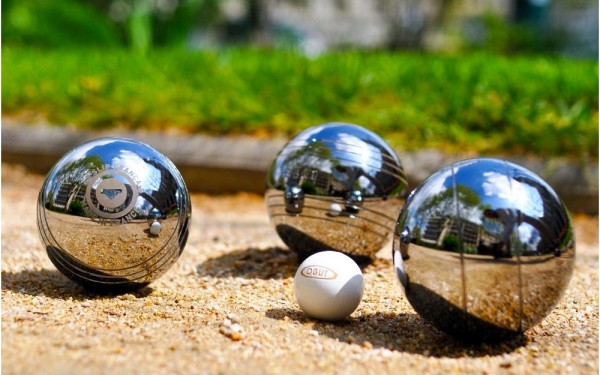
Pétanque, also known as jeu de boules, is a typically French sport in which players throw metal balls as close as possible to a small wooden target ball. Especially during a holiday in France pétanque is part of daily life on village squares, café terraces and holiday parks in regions such as Provence, the Dordogne and the Languedoc.
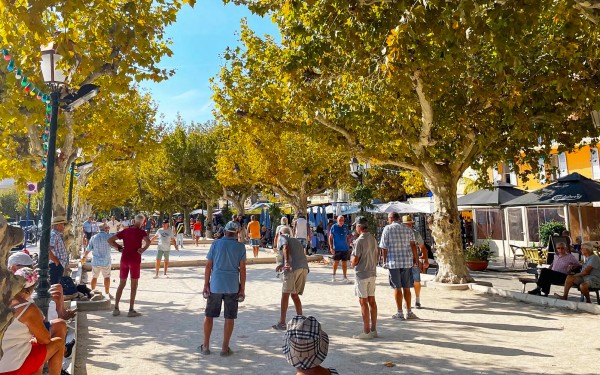
Anyone driving through a village from one of the FranceComfort holiday homes will see it happening: a group of people beneath the plane trees on a village square, a small wooden ball on the ground and metal boules being thrown with great precision. From a nearby terrace comes the clink of pastis glasses; someone argues passionately about which ball is closest to the jack, while tourists look on curiously from the edge of the square. This is France at its very best: relaxed, sociable and full of atmosphere.
Pétanque, or jeu de boules as many call it, is far more than a sport. It is part of French culture, the holiday feeling of the South of France that so many people return to year after year. Whether you are staying in a luxury holiday park, visiting a charming village or relaxing in a comfortable holiday home in France : chances are you will come across a pétanque court somewhere along the way.
For many holidaymakers, pétanque has become as much a part of France as markets, long outdoor dinners, lavender fields and medieval villages. On warm summer evenings you can often hear the familiar sound of metal boules clinking together on the gravel from a distance. That sound, combined with people chatting on the terrace and crickets in the background, is for many visitors the very essence of France.
What is the difference between pétanque and jeu de boules?
Many people use the words pétanque and jeu de boules interchangeably, but officially there is a difference. Jeu de boules is actually an umbrella term for various French ball games in which metal balls are thrown towards a small wooden target ball. Pétanque is the best-known of these.
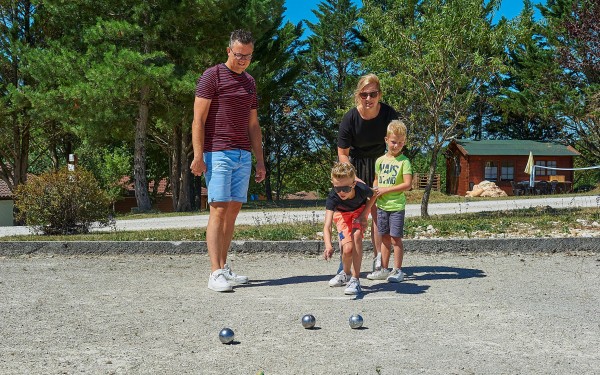
In pétanque, the player must stand still while throwing. Both feet remain within a small circle on the ground. This is precisely what sets pétanque apart from older forms of jeu de boules, in which players were still allowed to take a run-up. The word pétanque comes from the Provençal “pieds tanqués”, which literally means: feet planted firmly on the ground.
In practice, most people today mean pétanque when they talk about jeu de boules. On holiday parks, village squares and campsites throughout France, this is almost always the version played — certainly in southern French towns such as Antibes, Cannes, Èze or Cassis.
Alongside pétanque, other variants of jeu de boules exist, such as jeu provençal and boule lyonnaise. In Italy, bocce is popular. Even so, pétanque remains by far the best-known and most widely played version in France.