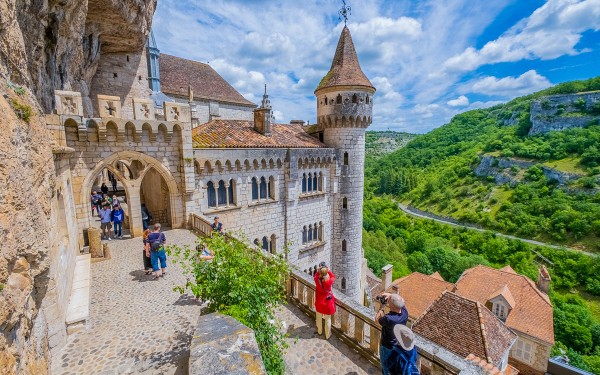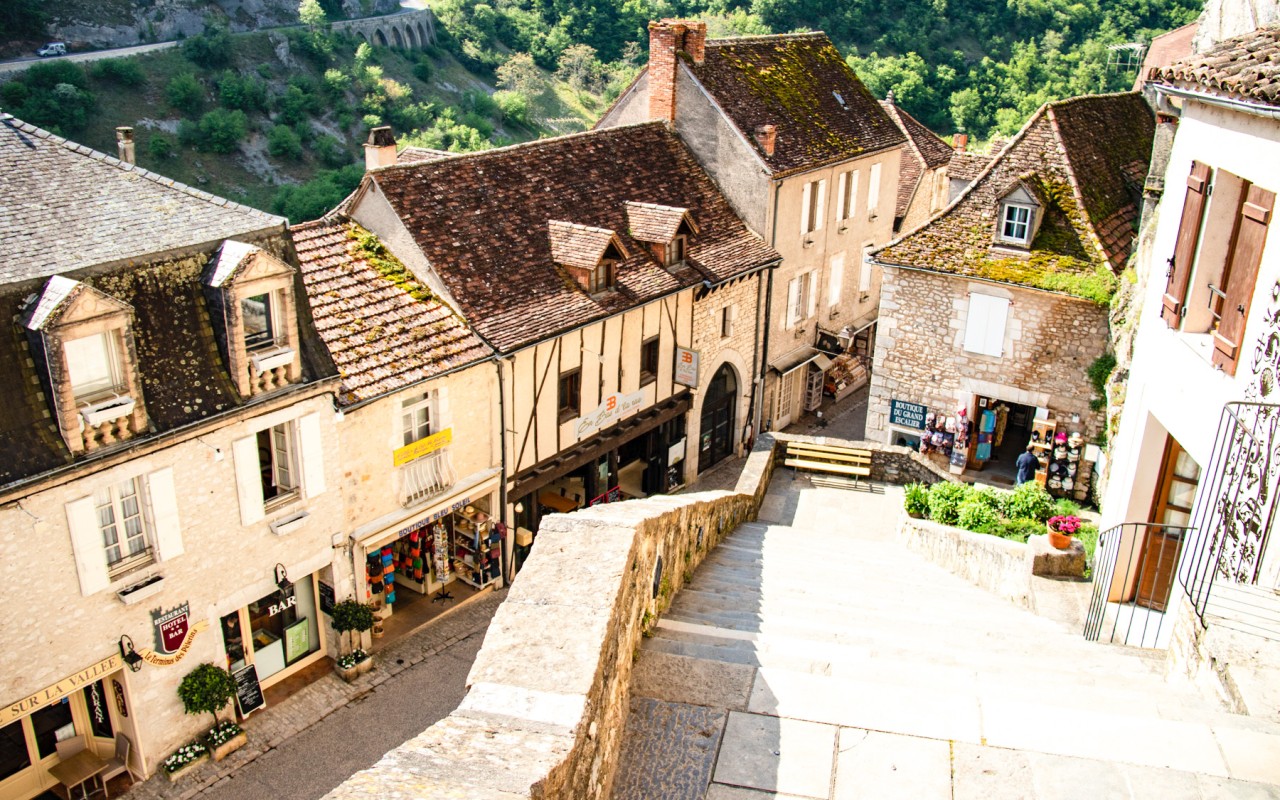

Rocamadour is situated against a steep cliff face above the Alzou River and is one of the most famous places in the Dordogne-Lot. During a visit, you can walk through narrow streets and up stairs past chapels, viewpoints and historic buildings. In this article, you will read about what to see, how to best visit the village from your holiday home in the Dordogne, and what to keep in mind.
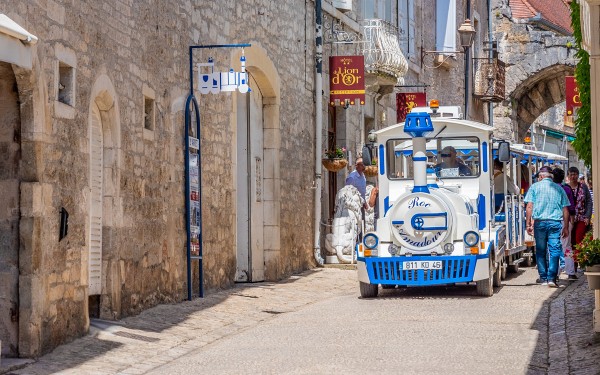
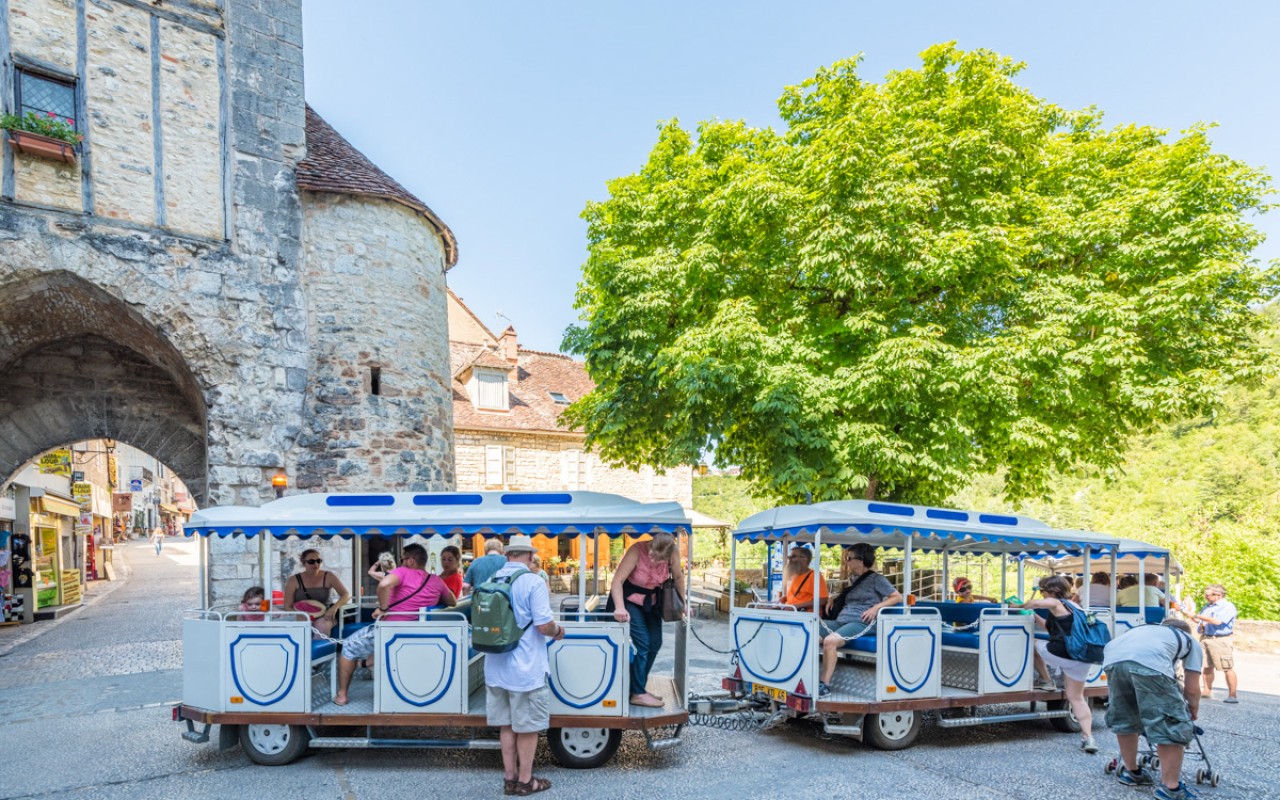
Every year, hundreds of thousands of visitors come here to walk up the narrow streets and stairs to the sanctuaries. After Mont Saint-Michel, this place in the Dordogne Valley is the most visited spot in France. After Lourdes, it is also the most visited pilgrimage site in France. Due to its location against the cliff face and the collection of chapels and stairs, the village has a very unique character. The village is situated on a rock above the Alzou River and is an essential part of a holiday in the Dordogne-Lot. You can park at the top and walk down, taking the lift back up, or park at the bottom and walk up. There is also a small train that stops at various places where you can get off. From your holiday park, such as Domaine de Lanzac, you can reach the foot of the Rocamadour cliff face within 20 minutes. It is a slightly longer drive from the holiday park Le Lac Bleu. You can make a day trip there if you are staying at the holiday park Village des Cigales.
What to do in Rocamadour
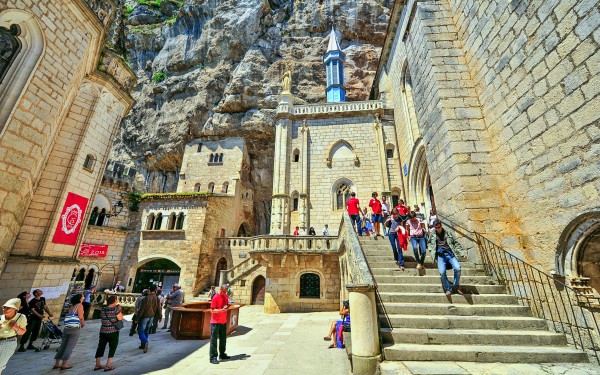
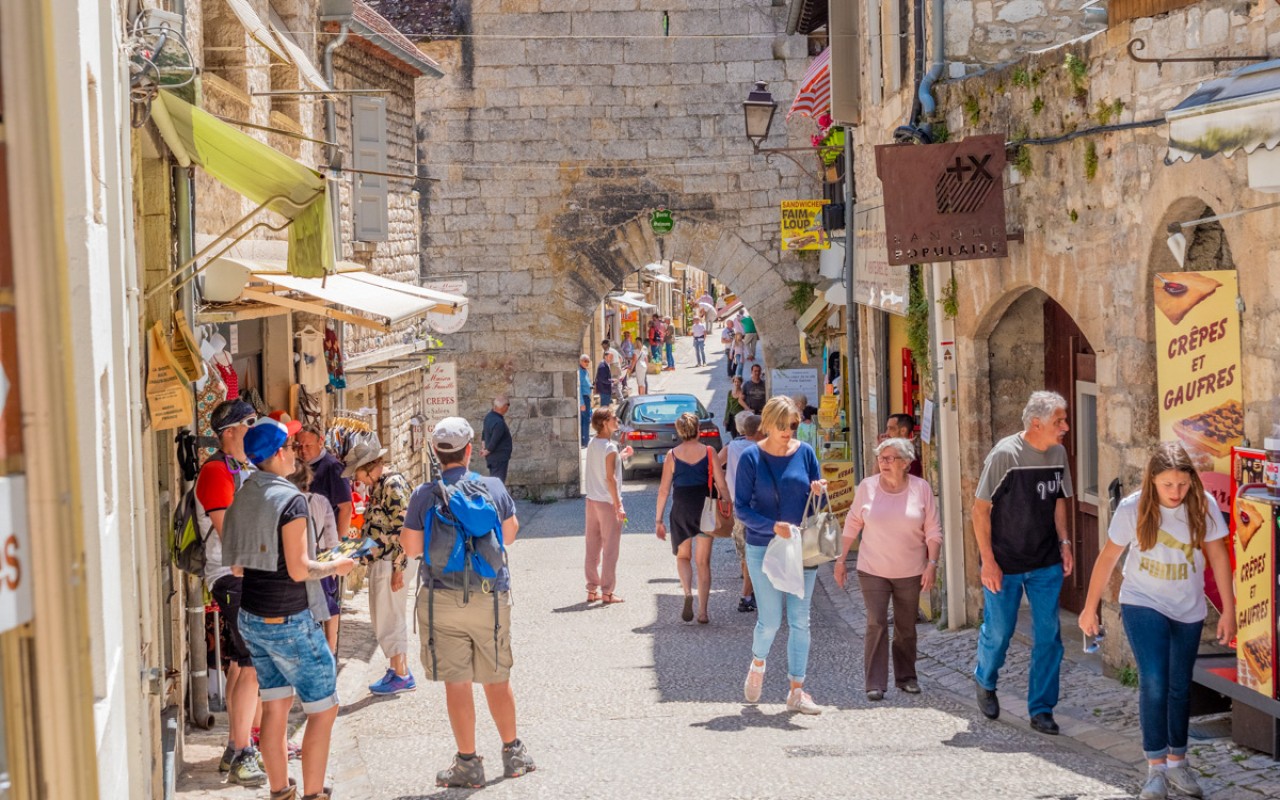
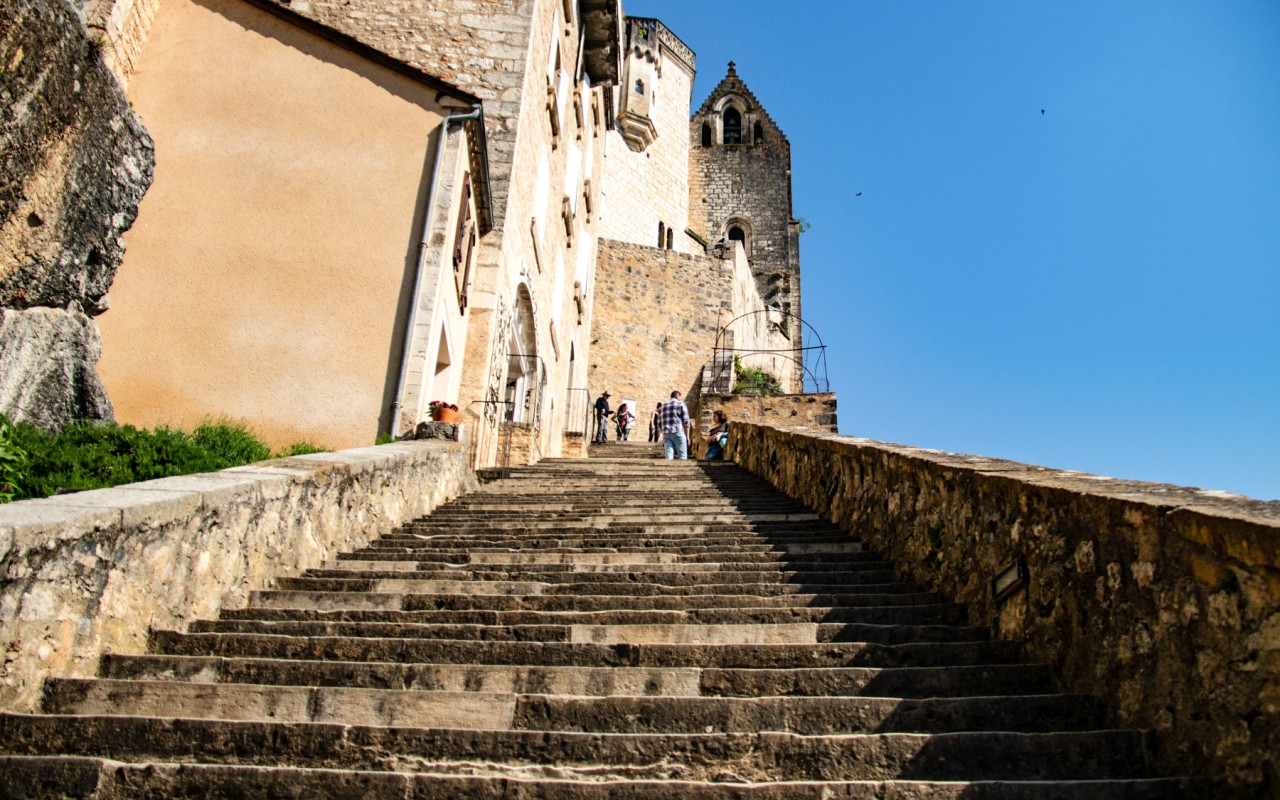
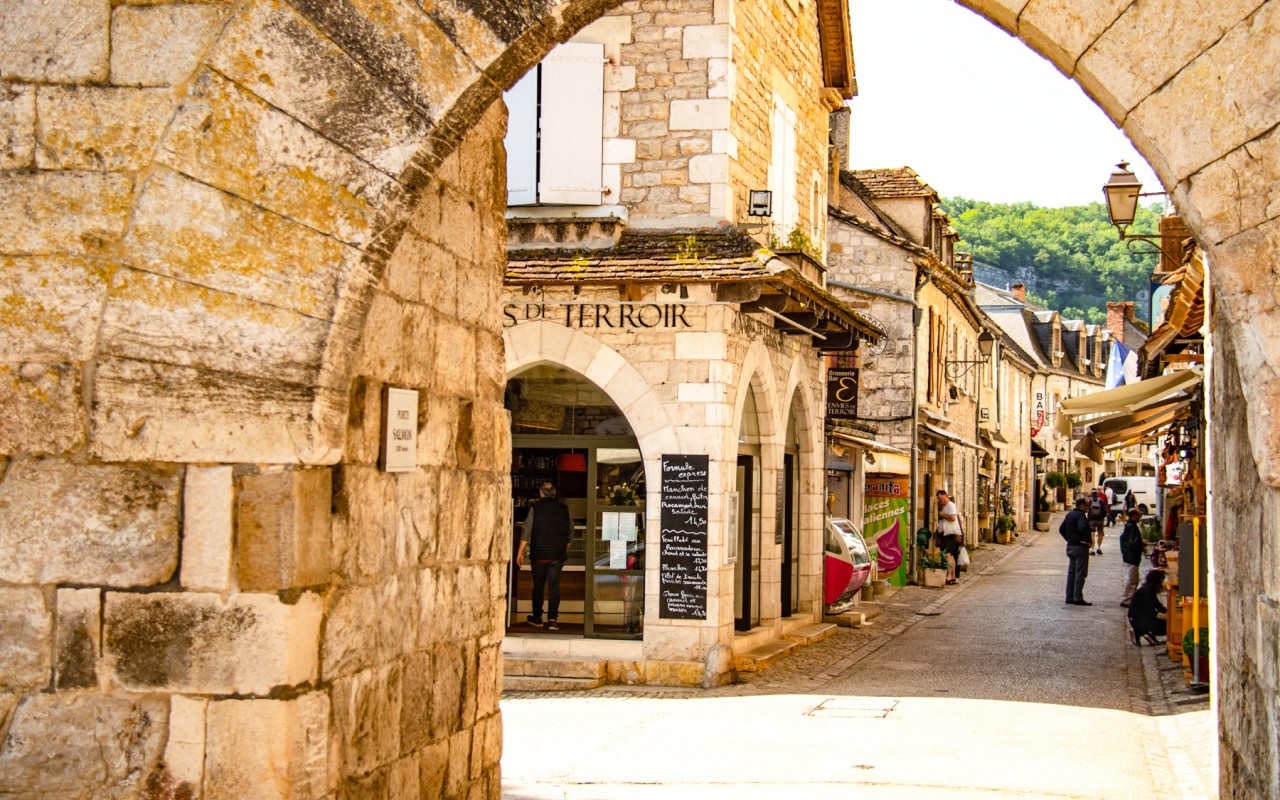
During a visit to Rocamadour, you almost always follow the same route: from the entrance gate through the main street to the famous staircase and the sanctuaries above. Along the way, you will pass small shops, terraces and viewpoints overlooking the valley.
These are the main highlights of a visit:
- The Grand Escalier with over 200 steps
- The Notre-Dame Chapel with the Black Madonna
- The Saint-Sauveur Basilica
- The view from the castle at the top
- The walking route via the Voie Sainte
Allow about half a day for a leisurely visit to Rocamadour.
History
People already lived in this place in the ancient past, as evidenced by the rock paintings found in caves. In the period before the Middle Ages, a hermit named Amadour settled here and a small monastic community subsequently emerged before the tenth century. In the twelfth century, a miracle is said to have occurred, after which a massive pilgrimage developed. When Amadour's tomb was subsequently discovered, Rocamadour grew into a popular pilgrimage site visited by many on their way to Santiago de Compostela. Rocamadour was destroyed during the Wars of Religion and the Revolution. In the second half of the nineteenth century, Rocamadour was fully restored. Rocamadour's current popularity is mainly due to the growth of tourism in the twentieth century.