Hoe voorkomt u stress op vakantie? 7 signalen en 5 tips

Stress on holiday often arises because your body is still in work mode and needs time to recover. By starting more gently, planning fewer activities and giving your mind time to switch off, relaxation often comes naturally.
Every year you feel it all over again: the suitcases are packed, the car is loaded and the anticipation should be building. Yet your mind is already full even before your holiday has properly begun. Many people head to one of the FranceComfort holiday homes to relax and unwind on holiday. Although a holiday home in France is luxurious and comfortable, many find that it isn’t always easy to find that peace of mind. Why is that? And how can you stop yourself from feeling stressed during your holiday? In this article, you’ll read about where that tension comes from and what you can do about it.

View the holiday parks   View the holiday homes

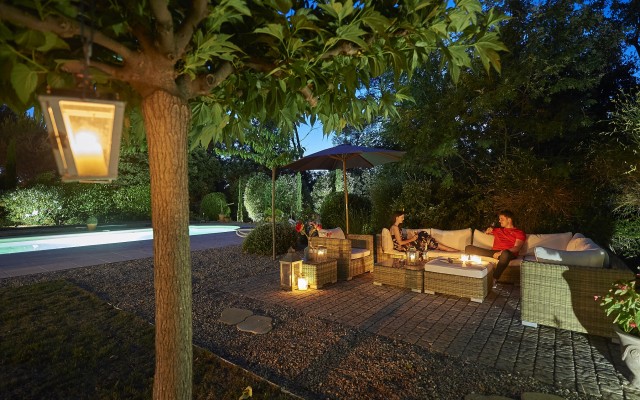
MZ8S1 Vallee de la Sainte Baume luxe villa prive zwembad Provence Frankrijk Middellandse zee strand.

Many people experience stress on holiday, or ‘holiday stress’, even though they go on holiday specifically to relax and reduce stress. That is perfectly normal. After a busy period, both your mind and your body need time to unwind.

At FranceComfort, we see a successful holiday in France primarily as a chance to catch your breath.

From a comfortable holiday home in France, you set your own pace. You don’t have to stick to fixed times, and you can start the day however you like.

What many people notice is that their body is still in the routine of work, school and obligations. It’s only after a few days that your mind really starts to relax and you slowly unwind on holiday.

7 signs that you’re stressed on holiday

Many people only realise during their holiday just how much tension they’ve actually built up. The moment the pace slows down, that tension often surfaces. That’s why it’s not unusual to still feel a bit restless during the first few days of your holiday.
Are you wondering if you might be suffering from stress on holiday? These signs are common.

You feel restless whilst you’re off work
Many people think they should relax immediately as soon as the holiday begins. But in reality, your body only starts to unwind then, which is why you really feel the built-up tension.

You plan every day full of activities
If you feel you have to do something every day, this may indicate that you find it hard to just sit still. You then forget to give yourself time to relax.

You sleep worse than at home
Although you now have time to rest, your sleep may be a little more restless for a while. After all, your body needs to adjust to the new rhythm and let go of the tension.

You can’t seem to get round to relaxing activities
Perhaps you had plans to read, go for a walk or go swimming, but you just can’t seem to manage it. This is often because your head is still full of all sorts of thoughts.

You keep thinking about work
Even when you’re sitting on a terrace or lying by the pool, your thoughts wander to tasks, deadlines or colleagues.

You’re constantly checking your phone
Just reading a quick message seems harmless, but your attention does remain fixated on work, the news or social media. 

You feel guilty when you’re doing nothing 
A quiet day is not a waste of time. It is precisely those moments that are essential for truly recovering after a busy period. 

These signs do not mean your holiday has been a failure. Quite the opposite: they show that your body is recovering after a busy period. Many holidaymakers find that this tension eases naturally after a few days. As soon as you slow down and make room for rest, relaxation often comes naturally.

Restaurant 7 Village des Cigales Mauroux Dordogne Frankrijk vakantiehuis.jpg

Why do the first few days of your holiday often feel tiring?

Some people wonder: why am I tired on holiday, when I’m finally off work? It is striking that many people experience severe fatigue during the very first few days of their holiday.
Research shows that a significant proportion of people feel tired during the first few days of their holiday. Some studies estimate that around 30 to 40 per cent of holidaymakers suffer from tiredness or tension during the first few days before their bodies really relax.

You’re finally off work, yet you feel tired, restless or even a bit ill. This is known as ‘leisure sickness’. For many holidaymakers, those first few days are a source of holiday stress, as their bodies have to adjust to a new rhythm. This is often because your body is finally relaxing after having been under pressure for a long time.

During busy working weeks, the body remains in an active state. As soon as the pressure of work, deadlines and daily tasks eases, all that built-up tension surfaces. This can manifest in various symptoms, such as tiredness, headaches or restlessness. The recovery that follows is perfectly normal. Your body slowly switches from a busy rhythm to relaxation. Many holidaymakers find that their energy returns naturally after a few days.

What is leisure sickness?

Leisure sickness occurs when people feel ill or extremely tired as soon as their free time begins, such as at the start of a holiday or a weekend. The term was introduced in 2001 by the Dutch psychologist Ad Vingerhoets of Tilburg University. You can find more information about this phenomenon in Tilburg University’s research on leisure sickness.
During busy periods at work, our bodies are often in a constant state of stress. They then produce more stress hormones, such as adrenaline and cortisol. The role of these stress hormones in stress and recovery is also explained by the Mayo Clinic. These hormones help us to stay alert and temporarily suppress the signals of tiredness or illness.
But as soon as the pressure of work lifts, for example during the first few days of your holiday, everything changes. The body suddenly relaxes, and the immune system reacts differently. Stress hormones temporarily suppress the immune system. When that stress disappears, the body may still react with fatigue or even a viral infection.

Why do many people find it hard to relax on holiday?

Many people find it difficult to relax during their holidays and notice that the stress lingers for a while on holiday. This is particularly true in the first few days, when their bodies still need to adjust to the slower pace. As soon as you allow yourself to unwind, the built-up tension can surface. According to the American Psychological Association, the body often needs time to recover after a period of prolonged stress has ended. This can even make you feel more restless than when you were at home. If you are still feeling tense after a few days, there may be various reasons for this, and these are often quite understandable.

  • You have set your expectations for your holiday too high. You want to see everything, do everything and experience everything. When your days are packed with activities, there is little room left for real rest.
  • Your routine changes. You go to bed later, eat differently and often less regularly. This throws your body out of balance.
  • Your children’s routine changes too. When children lose their daily structure, they often become more hyperactive and demand more attention.
  • Work remains on your mind. Many people still check their emails or remain contactable. This keeps your brain on high alert.
  • You feel guilty when you’re not doing anything. That feeling doesn’t automatically disappear just because you’re in a different country.

Upon arrival, your mind remains in the familiar rhythm of home for a while. Your body cannot simply switch to rest mode from one second to the next. In a spacious holiday home, peace of mind often comes naturally. You can start the morning relaxing on the terrace, take a refreshing dip later on, and in the evening cook together or go out for dinner in a nearby village.

Holidays with children: why can they be so tiring?

A holiday with children can be wonderful, yet very demanding at the same time. That’s why many families with children choose to go to a holiday park in France, where there’s plenty to do.

If facilities are limited, parents often feel the pressure to plan outings every day. That sounds appealing, but it can also be exhausting.

When children are constantly taking in new impressions, they can quickly become overstimulated. They get tired and need more attention. Staying at the park for the day gives the children the chance to go to the playground or join in the entertainment, whilst you and your partner can enjoy a moment of peace. Also focus on regular routines such as:

  • having breakfast together
  • an afternoon of swimming
  • playing in the park
  • a fixed quiet time
  • a familiar evening routine

In regions such as the Dordogne, there are plenty of activities for families. Consider, for example, visiting castles or picturesque villages such as Sarlat and Domme. A trip to the impressive Rocamadour is also popular with many families.

On warm days, you can go canoeing on the Dordogne. You’ll paddle past limestone cliffs, green banks and medieval villages. Along the way, you can stop off at various spots for a picnic.

Walking or cycling is also a great family activity. There are many walking routes in the Dordogne through vineyards, along rivers or in the woods. Do you prefer cycling? Then discover the cycle paths along the Lot.

What’s more, there are various options in the area for an active day out, such as water sports or a visit to an amusement park. Take a look, for example, at the options for water sports in the Dordogne and Lot or the various amusement parks and theme parks in the region.

Many families therefore choose a holiday with children in the Dordogne, where nature, villages and activities are all close by. This means you can do something different every day. When children are having fun, parents often find themselves with more peace of mind.

Check availability in France

MZ13b Vallee de la Sainte Baume luxe resort prive zwembad exclusief  Provence Frankrijk Middellandse

Unrealistic expectations: how to avoid disappointment on holiday

When you’re on holiday, you want to do fun things. Yet many people often try to cram everything a region has to offer into a single holiday. In the South of France, this proves almost impossible. The areas are vast, the villages are scattered, and there is often so much to discover.

Are you going on holiday for two weeks? Then don’t plan more than three or four major outings in advance. Think of a visit to a historic village, a beautiful nature reserve or a nearby town. Leave the remaining days open for spontaneous activities.

Do you wake up in the morning and feel like doing something? Then you can check what’s on in the area at that moment. In many regions, there are markets, walking routes and small villages close to your holiday home.

If, for example, you’re staying in Poitou-Charentes, you can start the day at a leisurely pace with a cup of coffee on a terrace and later visit one of the local markets in Poitou-Charentes. There you’ll find local cheeses, vegetables, bread and regional specialities.
If you fancy being active, you can opt for a walk in the countryside or a cycle ride through the countryside. There are many routes in this region, for example for walking in Poitou-Charentes or cycling in Poitou-Charentes.

Why is it that you still find yourself thinking about work whilst on holiday?

It’s often when you’re trying to do nothing that thoughts of work tend to pop into your head.

What helps is to wrap up your work properly before you leave:

  • make a list of tasks for after your holiday
  • hand over work to colleagues
  • turn off notifications on your phone
  • leave your work laptop at home

Many people experience stress on holiday because their minds are still preoccupied with work. Activities in nature often help you to relax and let go of thoughts of work.

In Provence, for example, there are many routes for walking through the Provençal countryside with your family. If you’re going on holiday with your partner, bring your bike to this region on the Mediterranean.

Along the way, you’ll often come across small villages where you can stop for a coffee or lunch. Here, you can also visit one of the local markets in Provence.

Why do you sometimes feel even more stressed on holiday?

When you go on holiday, you take yourself with you. If you’re someone who worries easily or has a strong sense of responsibility, that doesn’t just disappear the moment you finally arrive at your destination.

In a peaceful setting, you may even experience this more intensely. There is more space to reflect on thoughts that you often ignore at home due to the hustle and bustle of everyday life. Sometimes it helps to tackle minor irritations straight away. Or perhaps it helps to jot your thoughts down on paper.
Many holidaymakers find that the tension eases naturally after a few days, especially if you exercise regularly. The World Health Organization also emphasises that regular exercise helps to reduce stress and allows the body to recover.

5 ways to relax more quickly on holiday

These practical tips will help you reduce stress on holiday and relax more quickly.

  1. Plan fewer activities
    Leave room for spontaneous days without a schedule.
  2. Start the day calmly
    Start with breakfast on the terrace instead of heading out straight away.
  3. Go outside for a bit every day
    Walking, swimming or cycling helps your body relax.
  4. Limit screen time
    Leave work emails and news updates alone as much as possible.
  5. Accept that relaxation takes time
    The first few days of a holiday are often still a transition period.
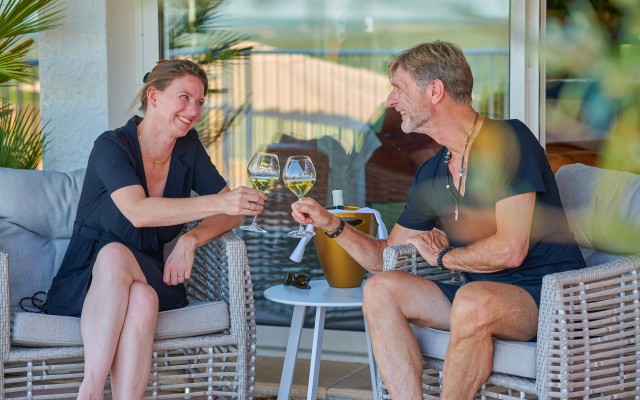
Lanzac binnenplaats 1S samen genieten glas wijn Frankrijk op vakantiepark.jpg

How can you prevent stress on holiday?

Stress on holiday often arises because your body is still in the rhythm of work and daily obligations and therefore struggles to unwind whilst on holiday. Your mind doesn’t immediately switch to relaxation as soon as you arrive at your destination. So give yourself time to switch off.

Many holidaymakers find that the first few days are mainly a transition period. Research shows that a holiday does indeed help to reduce stress and improve well-being, as described by Harvard Medical School. A walk in the countryside, a quiet afternoon by the pool or a visit to a local market often helps to refocus your attention on your family and the holiday. 
As the holiday progresses, you’ll often find that the tension gradually fades away. This allows your holiday to become what it’s meant to be: a time to recharge, spend time with your family and enjoy your surroundings.

Prevent holiday stress by sorting everything out properly in advance

Some holiday stress arises even before you set off and continues into the holiday itself. If you still have lots to sort out at home or encounter unexpected rules whilst travelling, the journey often gets off to a hectic start. By checking a few practical matters in advance, you’ll set off feeling much more relaxed.

In various French cities, you’ll need an environmental sticker, known as the Crit’Air vignette, as environmental zones apply in France. It’s also a good idea to buy a toll badge so you don’t face any surprises or unexpected costs on the road.

Information about supermarkets in France can also be useful when you’ve just arrived.

Before you set off, check which rules apply in France, whether it’s best to drive or fly, and make a good packing list for your holiday in France

If you’re travelling by car, familiarise yourself with the traffic regulations. Bear in mind potential traffic fines in France, the rules regarding winter tyres and busy routes such as the Route du Soleil.

Finally, it can be fun to learn a bit about French culture and public holidays in advance. Read up on Quatorze Juillet or other public holidays in France. That way, you’ll know what’s going on during your stay.

By arranging these kinds of practical matters in advance, you will depart more calmly and your holiday will start in a relaxed manner. Should you enjoy France so much that you wish to return more often, consider the possibility of having your own place, as you can read on Buying a Holiday Home in France.

In which region of Southern France can you best relax?

A relaxing holiday in France begins with a peaceful environment and space for your own pace.
Do you want to hike, cycle, and canoe? Then the holiday homes in the Dordogne are a good choice. Do you love sunshine, lavender fields, and Provençal villages? Then a holiday home in Provence fits well.

Another popular region is Languedoc. It is always relaxing to stroll quietly through one of the markets in Languedoc. The nature is very varied, so you can walk through the vineyards one day and cycle past tourist villages the next.

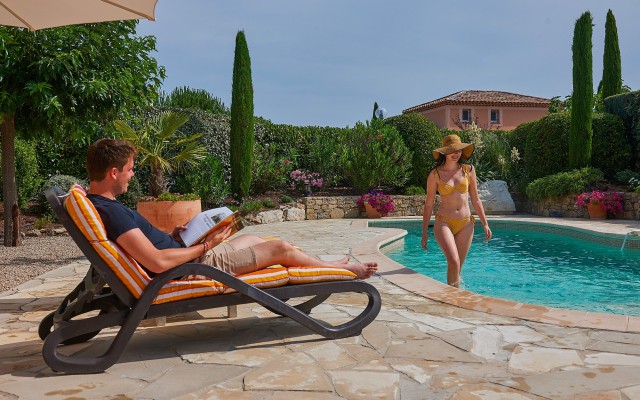
Do you prefer to be less active and simply relax at your holiday home? In that case, many holidaymakers choose a holiday home with a private swimming pool. It is ideal for the children; they spend the whole day in the water. On warm days, you yourself can also relax by the pool with a good book and a glass of wine.

In the mountains, you can enjoy the fresh air if you stay at one of the AlpResort Portes du Soleil or AlpChalets Portes du Soleil parks.

Guest experience

“During the first few days of our holiday, our minds were still racing. We wanted to do all sorts of things. After a few days, we decided to just spend a day by the pool. The children played in the water while we sat on the terrace with a book. From that moment on, the holiday felt truly relaxing.”
— The Van Dijk Family, holiday in the Dordogne

Editors

This article was created by the travel advisors at FranceComfort in collaboration with specialists in the field of holiday behavior and relaxation during travel. The content is based on practical experience from the travel industry, observations by park managers, and insights derived from conversations with guests.

Frequently Asked Questions about stress on vacation

1. Why do I feel stressed during the first few days of my vacation?
Many people experience stress during the first few days of their vacation. The body needs time to recover from work pressure and daily routines. As a result, some people feel tired or restless at first before they truly relax.

2. How long does it take to relax on vacation?
It usually takes three to five days for the body to truly unwind. 

3. Does a vacation home help with stress better than a hotel?
A vacation home often offers more peace, space, and freedom.

4. Why are vacations with children sometimes tiring?
Children often struggle with a changed rhythm and become overstimulated more easily.

5. What helps you relax faster on vacation?
Quiet activities such as walking, swimming, or reading help your body to gradually switch off.

6. Why do some people get sick at the beginning of their vacation?
This is because the body is finally relaxing after a period of stress. The immune system is then given the space to process fatigue and built-up tension.

Your relaxing holiday in France starts here

Do you want to truly unwind during your holiday? Take the time to choose an environment that suits you. On our page about regions in France, you will find an overview of the areas with FranceComfort holiday parks and accommodations where you can enjoy your holiday in peace. This way, you avoid stress on holiday and give your body and mind the time to truly relax.

View FranceComfort's luxury holiday homes and holiday parks and book your holiday             

View the holiday parks   View the holiday homes