Cycling in the southern Languedoc

Peace, space and a leisurely pace in Aude, Ariège and Pyrénées-Orientales

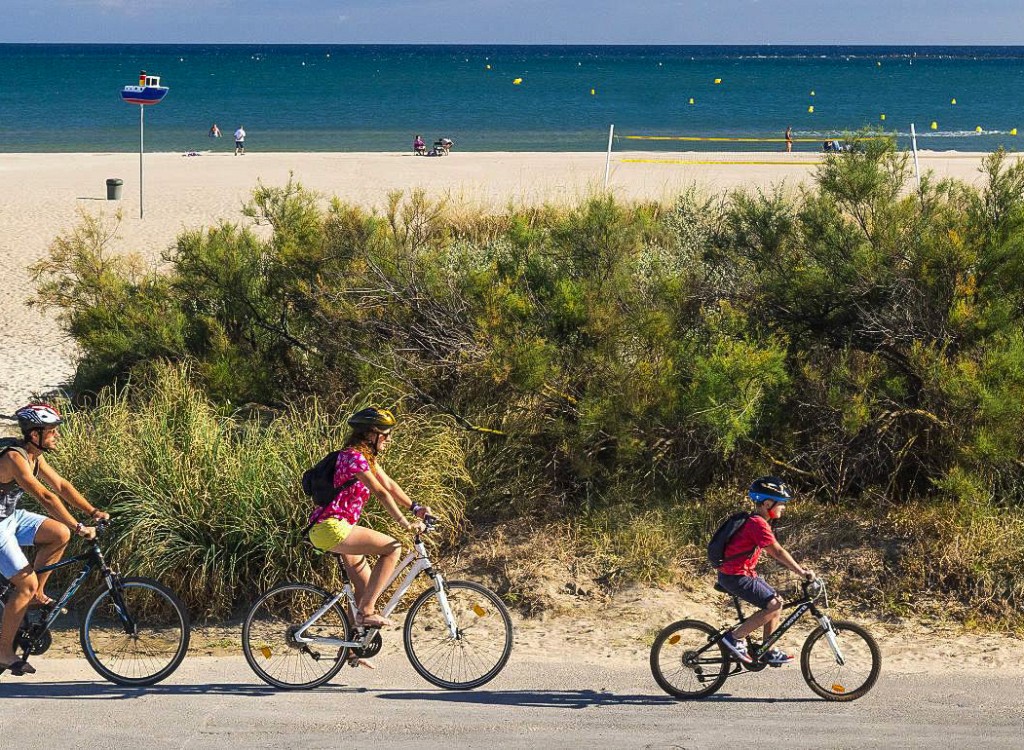
Cycling in the South of France is often associated with sporting ambitions: long climbs, tightly planned routes and days that revolve around distance and pace. In the southern Languedoc this is completely different. During your holiday, you can cycle for pleasure, with your family or as a couple. From your holiday home in the Languedoc you can fully enjoy the beautiful nature and charming villages. In the Aude, Ariège and Pyrénées-Orientales,  the landscape is so appealing that cycling naturally becomes part of your day. It is a great way to explore the area.
Many guests deliberately choose a holiday in France because of the space, the climate and the comfort. It is only after arriving that they realise how pleasant it is to hop on a bike in the morning, go for a ride and then leave the rest of the day open. That's exactly what makes cycling in the region of holiday park L'Espinet so appealing.

Our parks in Languedoc     Our homes in Languedoc

Fietsen Languedoc 1 vakantie in Frankrijk in luxe villa.jpg

Why is cycling so enjoyable here?

The southern Languedoc lies between two extremes: the Pyrenees and the Mediterranean Sea. This ensures plenty of variety in the cycling routes. Most of the routes run along the coast, through valleys, along rivers and over gently rolling terrain.

In addition, you will regularly pass tourist villages where you can take a break and have a drink on a terrace. This makes cycling a relaxing experience, even if you don’t cycle every day or are travelling with children. On top of that, you’ll hardly be bothered by traffic. Outside the larger towns, traffic is mainly local. This means you can fully relax and enjoy the surroundings.

Anyone staying in a holiday home in France will notice how pleasant it is that cycling routes do not start at car parks, but simply at the front door. Many of the quiet roads and valleys you cycle through can be found on the maps of the Institut national de l’information géographique, France’s official cartographic service.

How does cycling form part of your day here?

Cycling in this region with your partner or family is best when done in a relaxed manner. You might get up a little later and take your time over a delicious French breakfast. Many guests cycle two or three mornings a week. Sometimes a longer ride, sometimes just a short loop. After lunch, the rest of the day naturally fills itself with other activities.
Another day might be spent quite differently. Do a bit of shopping in the morning and cycle to a nice seaside resort on the coast of the Mediterranean Sea or a recreational lake in the afternoon.

Guest Brenda says: "We discuss with the children how we are going to spend the next day and take each other's wishes into account. Every day of the holiday is a treat!"

Which bike suits this region?

You can ride various types of bikes in the Aude, Ariège and Pyrénées-Orientales.
For many holidaymakers, a hybrid bike is the most versatile option. It’s comfortable on tarmac, but you can also tackle unpaved paths with ease.
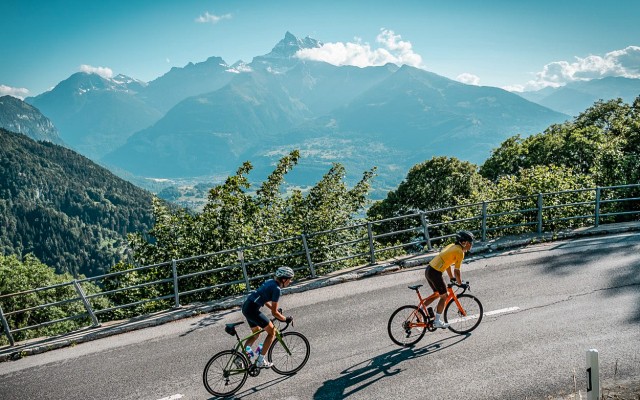
E-bikes are remarkably popular here. Not because the terrain is extreme, but because they make cycling even more relaxing. What’s more, they allow you to cycle just that bit further. They’re also particularly comfortable in warm weather. A city bike is fine in flat parts, but limits your choice of route. Road bikes are less suited to the character of this region, which invites you to look around, stop and explore.
If you want to learn more about official cycling routes and regional cycling networks, you can take a look at France Vélo Tourisme, the national platform for cycling tourism in France.

What types of roads are there?

One of the reasons cycling in southern Languedoc feels so enjoyable is the variety of road types. You aren’t tied to specific routes.
Most of your rides will take you along quiet departmental roads. These are regional connecting roads with good tarmac and clear bends. These roads are particularly quiet and pleasant in the morning.
In addition, there are countless small roads that wind through vineyards, past fields and along forest edges. These are often the most beautiful sections of a route and there is very little traffic.
Car-free paths, such as old railway lines and towpaths, are also found here. They are flat and easy to navigate, making them suitable for families. Those wishing to venture further into nature can follow wide forest and farm tracks that connect villages and nature reserves.
You can find more background information on the landscape and the surrounding area via nature reserves in the Languedoc and Ariège.

Accommodation and comfort after cycling

After a bike ride, you will return to your accommodation. It is precisely that moment that determines how relaxed your day feels. Many guests therefore consciously choose a comfortable holiday home or holiday park where space and facilities are self-evident.
Our holiday homes will give you a good idea of accommodations that match this type of holiday. Think of shade, a swimming pool and practical amenities such as air conditioning, especially in the summer months. You can read more about this on the page holiday homes with air conditioning.

Small details that make a difference

Anyone cycling here will notice that small things can affect the course of the day. In many villages, the bakery closes by the end of the morning.
Market days bring extra liveliness and sometimes cause a bit of a delay on access roads.
Once you accept this, you’ll discover how pleasant it is to leave some flexibility in your schedule. Information on local markets can be found, for example, via markets in the Languedoc. Background information on landscape, routes and seasons in these regions can also be found via Tourisme Occitanie, the official tourism organization of the region.

Fietsen Languedoc 4 vakantie in Frankrijk in luxe villa.jpg

Cycling in the Aude: open countryside and water

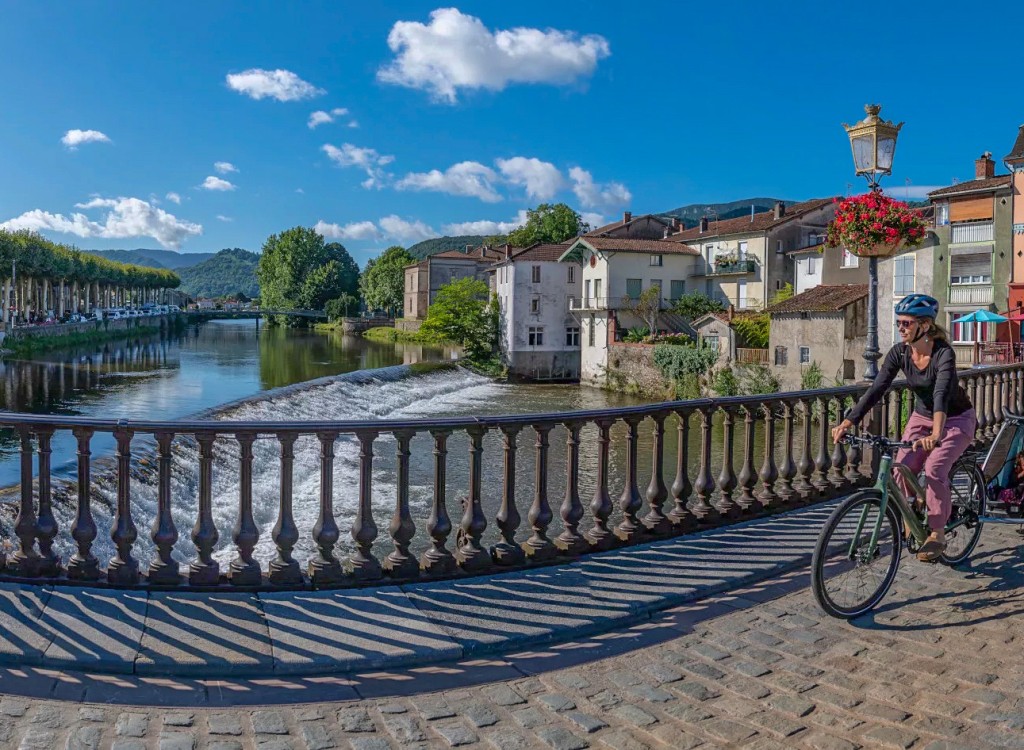
The Aude is a popular cycling destination for many holidaymakers. The landscape is open, offering stunning views, and you’ll pass through charming villages along the way. You’ll often cycle alongside streams and rivers. The open landscape and the influence of the wind in the Aude are partly shaped by protected areas such as the Parc naturel régional de la Narbonnaise.

You can easily combine a bike tour with other activities. Take a morning cycle along the river, then visit a market and have lunch in the village square. You have complete freedom. That is precisely why this region is popular with families and couples who want to be active without fixed schedules.

Anyone staying in a holiday home in France or at a holiday park in the Languedoc will notice how easy it is to set off on a whim. If you fancy a picnic along the way, bear in mind that bakeries often closes by the end of the morning in smaller villages. Make sure you buy your croissants and baguettes in good time.

Fietsen Languedoc 5 vakantie in Frankrijk in luxe villa.jpg

Cycling in Ariège: tranquility and valleys

The Ariège has a less open landscape than the Aude. There are also fewer villages, and for some cyclists, that is precisely what makes the Ariège so appealing. Your cycle routes take you through wide valleys, often alongside rivers that meander through the green countryside.

There is little traffic here; many roads are mainly used by locals. You often won’t see a car for quite some time. This gives you space, especially if you’re cycling together or deliberately seeking peace and quiet. In the Ariège, many cycle routes pass through protected nature areas, including the Parc naturel régional des Pyrénées Ariégeoises.

The villages in Ariège are smaller than in Aude and have fewer terraces and shops. Visitors say they often take a break by a river or at a picnic spot. They often take a short walk through the nature reserve as well. You can find more inspiration for hiking opportunities via hiking in the Languedoc and the surrounding nature reserves.

Fietsen Languedoc 3 vakantie in Frankrijk in luxe villa.jpg

Cycling in the Pyrénées-Orientales: light and wind

The Pyrénées-Orientales form the southernmost part of this region. The landscape is drier, the light brighter and the Catalan influences are visible in architecture, language and cuisine. Cycling here feels different than in the Aude or Ariège, especially because of the climate. For those who want to adapt their bike trips to temperature and wind, Météo-France offers reliable regional climate information.

The cycling routes go through orchards, past vineyards and through open valleys with a view of the mountains. Wind can play a role, especially the tramontane.

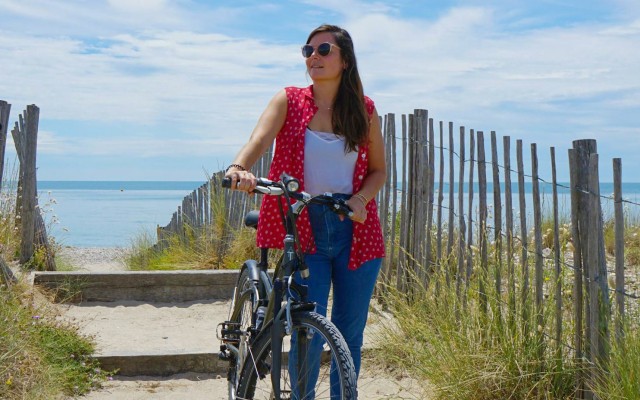
Mornings are ideal for cycling. The air is clear, the temperature is pleasant and the traffic is light. In the afternoon, the temperature rises quickly, especially in summer. Save the afternoon for relaxing by the pool or at the seaside. For many guests, this is the region where cycling goes hand in hand with a holiday by the Mediterranean Sea.

How do you experience the breaks when cycling through villages?

One of the lovely moments when cycling in France is the way you cycle into tourist villages. You often end up right in the village square. That makes villages natural places to take a break.
You dismount, lean your bike against a wall or tree and take a seat on a terrace. Before long, a cup of coffee is served, or a refreshing drink on hot days.
Market days add extra liveliness. A cup of coffee is quickly poured, or a refreshing drink on warm days.
Public holidays also influence village life. On days such as Quatorze Juillet, villages are livelier, with music and events. You can read more about this on public holidays in France and  Quatorze Juillet.

Cycling and walking in France

Those who like to spend their holidays being active will soon realise how well walking and cycling complement each other. During a holiday in France, many guests alternate a bike ride with a walk in the local area. You can find more inspiration on hiking during the holidays and on the theme page about cycling in France.
Other regions also demonstrate just how natural this combination is. In the southwest of France, for example, you can read more about cycling in the Dordogne and about the cycle paths along the Lot, while hiking routes and landscapes are explored on Hiking in the Dordogne. Further to the southeast of France, the active rhythm fits in well with the climate of the Mediterranean Sea. Those who stay there often combine cycling and walking effortlessly, as described on the pages hiking in Provence and cycling in Provence.
This variety is also obvious in the west of France. In the Poitou-Charentes, quiet cycling routes and hiking opportunities are often combined, which is reflected in walking in the Poitou-Charentes and cycling in the Poitou-Charentes.

Cycling and culinary enjoyment

The region is popular not only for its many cycling opportunities, but also for its French cuisine. Along the way, you’ll come across bakeries, small grocery shops and cafés. You don’t need to bring a packed lunch. A piece of bread, some fruit and water are often enough.
The next day, you’ll have lunch on the terrace in the village square. You’ll enjoy the local dishes and a glass of wine. Many guests find this variety particularly rewarding.
In addition, a comfortable holiday home in the Aude, Ariège or Pyrénées-Orientales is important. A luxury holiday villa to which you return after your cycle ride. This is certainly true in the warmer months, when amenities such as air conditioning contribute to your comfort and help you relax after a cycle ride.

The daily cycling rhythm during your holiday

In the southern Languedoc, cycling works best when it becomes part of a fixed, relaxed daily rhythm. You don’t need to plan that rhythm; it develops naturally.
Many guests start the day gently, cycling in the morning and leaving the afternoon free. This fits in with the climate and local life. Cycling never feels like something you ‘have to’ do, but rather something that fits in naturally.
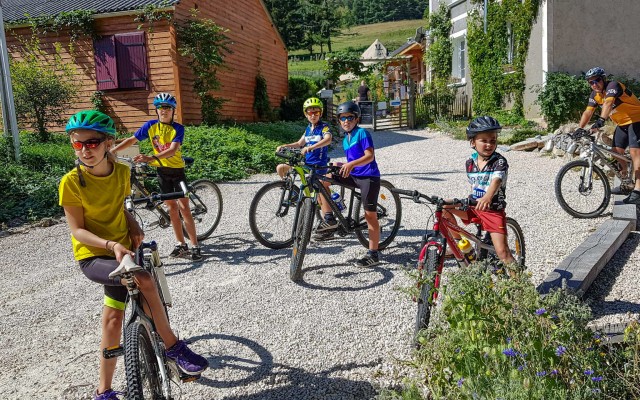
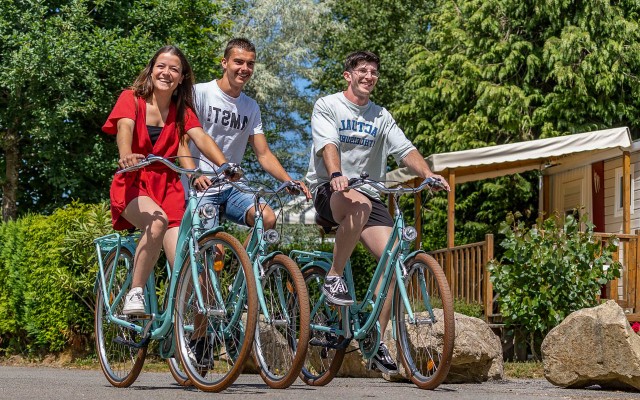
This works particularly well for families. Cycling becomes a shared activity, without any pressure. You can find more inspiration for this type of holiday on the theme page about holidays in France with children.

How do you combine cycling with hiking and nature?

A big advantage of cycling in this region is that it can easily be combined with other sports activities. Walking is an obvious choice, particularly in the Ariège and the more hilly parts of the Languedoc. Many cycling routes cross walking areas or run alongside nature reserves where you can easily hop off your bike.

Our holiday parks in Languedoc      Our holiday homes in Languedoc

Ten cycling routes for your holiday in the South of France

Cycling in the southern Languedoc isn’t about fixed routes with signposts and arrows. These are routes that emerge naturally because the landscape, villages and roads here connect seamlessly. The routes below are therefore not rigid GPX tracks, but day trips as they are actually cycled. Some routes in the South of France connect to international networks such as EuroVelo, although cycling here is mainly about regional connections and day trips. They can easily be adapted to the time of day, the season and the company you are traveling with. Distances and times are based on relaxed holiday cycling, with plenty of scope to stop, look around and take breaks.

Around the Lac de Montbel in Ariège (20km)

A tour around the Lac de Montbel is an ideal bike ride for many guests. The distance is between 18 and 22 kilometres, depending on how you finish the loop. Allow for about one and a half to two hours of cycling.
The route follows quiet roads and wide paths along the reservoir. The elevation gain is minimal. Occasionally, the road slopes gently. The landscape is open and unobstructed. The water remains in view almost constantly, with the hills of the Ariège behind it.

Along the way, you will experience above all silence. Birds, reed beds and water set the pace. Cars are few and far between. This makes this route particularly suitable for families and for those who, upon arrival, wish to get used to cycling in the region first.
There are several spots along the lake where you can take a break. There are small beaches, picnic areas and shaded spots. On warm days, you can go for a swim. Many guests combine this route with a relaxing afternoon by the water.

Quillan – Couiza: cycling along the Aude (27km)

This route follows the Aude Valley and clearly illustrates how water shapes the landscape here. The cycle route is approximately 25 to 30 kilometres long. The cycling time is around two to two and a half hours. You set off from Quillan and follow the river towards Espéraza and Couiza. The road winds gently through the valley. There are few changes in elevation. You cycle alongside the water for much of the way.

What makes this trip appealing is the variety. You cycle past wooded slopes, small bridges and villages where life revolves around the square. Espéraza is a logical place to stop for a break, with terraces and amenities. Couiza feels quieter, but offers benches and shade along the river.

Prades – Vinça – Marquixanes: low mountain range (26km)

In the Pyrénées-Orientales, this route offers a distinct mountain feel without being too strenuous. The distance is around 26 kilometres and the cycling time is around two to two and a half hours.
You cycle along the River Têt, with a constant view of Mont Canigou. The road climbs gradually. Orchards and open valleys dominate the landscape.
Vinça makes a logical place to rest. Here you’ll find cafés and shade. Further on, the landscape opens up and feels drier and lighter than in the Aude or Ariège. This route is ideal for e-bikes and for those looking for a short but impressive ride.

Lagrasse - Corbières: cycling near vineyards (32km)

This route takes you through the Corbières wine region and demands a little more from your legs, though it isn’t particularly strenuous. The distance is around 32 kilometres. Allow three to three-and-a-half hours of cycling.
You start in or near Lagrasse, a village where you’ll want to have a look around even before the cycle ride. You then cycle out into the open countryside. The route features several short climbs, interspersed with flat sections.
Along the way, you’ll see vineyards, rocky hills and views that change with the seasons. The light here is particularly bright in the morning. There isn’t much shade, which makes this route better suited to cooler days or an early start.
The best places to stop for a break are in Lagrasse or in one of the small villages along the route. This ride is often chosen by couples and e-bike users who want to experience the landscape without too much effort.

Foix – Varilhes – Pamiers: the Ariège valley (35km)

This valley route is ideal for those who want to cycle a little longer without much difference in altitude. The distance is about 35 kilometers and the cycling time is around three to three and a half hours.
You set off from Foix, with a view of the castle, and follow the wide Ariège valley towards Varilhes and Pamiers. The road is well-maintained and easy to navigate. The best thing about this route is that you can cycle at a leisurely pace, with plenty of time to take in the views. Villages and open stretches alternate. Varilhes offers cafés and shaded spots, whilst Pamiers has squares where you can take a quiet break.
This route is ideal for longer morning rides and can easily be combined with a train journey back. This adds extra flexibility to your day.

Mirepoix – Camon – Lagarde: passing through villages (28km)

Anyone who likes to combine cycling with exploring villages will feel right at home on this route. The distance is approximately 28 kilometres and, including breaks, the ride takes around two and a half to three hours.
You set off from Mirepoix, with its half-timbered houses and spacious market square. From there, you cycle through open countryside towards Camon and Lagarde. The roads are quiet and wind through fields and farmland. The terrain is gently rolling.
Camon is a good resting point. The village is compact and green, with cafes and shady areas where you can easily linger for a while. Lagarde is smaller and quieter, but offers views and space. This route is less about nature and more about atmosphere. Many guests experience this type of ride very suitable for cycling in the Languedoc: relaxed, varied and uncrowded.

Axat – Saint-Martin-Lys: cycling through the gorge (20km)

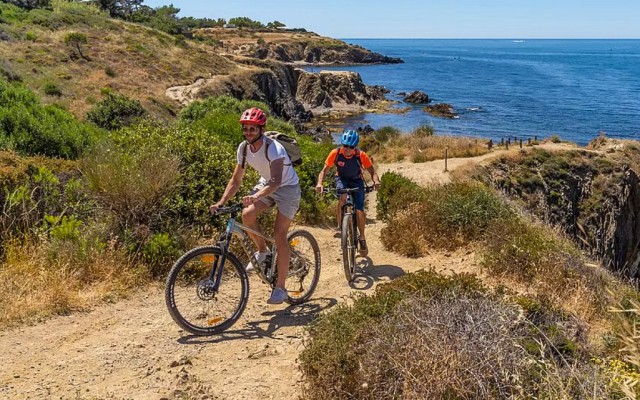
This route is shorter, but very impressive. You’ll cycle about 20 kilometres there and back, and the journey takes around two to two-and-a-half hours. The road follows the river and runs through a narrow gorge. Rock faces rise up on either side. There’s little traffic, but the road is narrow. It’s important to cycle carefully and keep a close eye on your surroundings here.
Saint-Martin-Lys is the turning point. Here you can take a break at a café or by the water. This route is most pleasant to cycle in the morning, when it is cooler and the light is soft.

Ille-sur-Têt – Bouleternère: open and light (24km)

This route shows a different side of the region. You cycle for about 24 kilometres through open, dry countryside, taking around two to two-and-a-half hours. Orchards, open fields and Catalan villages dominate the landscape. The terrain is gently undulating. Shade is limited, making this route ideal for early morning rides.
Bouleternère has a quiet square which is the perfect place for a break. This ride fits well into a day where cycling isn’t the main objective, but a pleasant way to spend the morning.

Chalabre – Puivert: woodland and open countryside (30km)

Allow for about three hours of cycling.
You will cycle through a mix of woodland and open countryside. The climb towards Puivert is gradual and easy to pace. Puivert Castle serves as a clear landmark and a logical spot to stop for a while.
You can take a break in Chalabre or by Lake Puivert.
This route offers plenty of variety and is ideal for cyclists looking for a bit more than just a flat loop.

Foix – Tarascon-sur-Ariège (22km)

This route of about 22 kilometers follows the river and is almost flat. The cycling time is around two hours. You’ll cycle at a leisurely pace along the water and through small villages. The landscape is green and peaceful. Tarascon offers cafés and squares for a break. This route is easy to combine with public transport or a short walk, giving you extra flexibility during your day out.

Fietsen Languedoc 8a vakantie in Frankrijk in luxe villa.jpg

Safe and relaxed cycling in France

Cycling in France is pleasant and relaxing, but there are rules that are good to know. In France, cyclists are considered full-fledged road users. In principle, you msut ride on the road, unless there is a mandatory cycle path.
Motorists keep their distance and adjust their speed, particularly on rural roads. In the Aude, Ariège and Pyrénées-Orientales, people are used to slow-moving traffic. This creates a sense of calm, even when cycling with children.
Helmets are compulsory for children under twelve. For adults, helmets are not compulsory, but they are advisable, especially outside villages. Lights are compulsory in poor visibility and in tunnels.
At roundabouts, the same rule applies as for cars: traffic on the roundabout has right of way. This can take some getting used to, but motorists are very mindful of this.

Fietsen Languedoc 9 vakantie in Frankrijk in luxe villa.jpg

Practical tips that make a difference on the road

Cycling in southern Languedoc is a pleasure, but a few small choices often determine whether a cycle ride feels truly relaxing.
It’s best to set off early in the day. It’s cooler and quieter in the morning. This makes a big difference, especially in summer. The villages are already awake, but the heat hasn’t set in yet.
Think in terms of time rather than kilometres. Twenty kilometres can be a short morning ride, but it can also take up half a day if you stop frequently. That’s not a drawback, but rather the charm of cycling in this region.
Water is more important than food. You’ll usually find a bakery or café along the way, but not always water. Especially outside the villages, it’s a good idea to bring enough with you.
Be flexible. Wind, heat or a lively village can affect your plans. That’s not a problem, but part of cycling here. Sometimes you’ll shorten the route, sometimes you’ll choose a different direction. It’s precisely that freedom that makes it so enjoyable.
Many guests find that cycling is even more enjoyable when their accommodation offers the same flexibility. From a comfortable holiday home, you decide for yourself when to set off and when to return. This brings a sense of calm to your day and prevents the feeling that you’re tied down.

Fietsen Languedoc 11 vakantie in Frankrijk in luxe villa.jpg

Which region best suits your way of cycling?

Although the Aude, Ariège and Pyrénées-Orientales are close to one another, they are distinctly different in character. Your choice will set the pace for your cycling holiday.
The Aude is a good fit for you if you enjoy a clear overview, variety and village life. Routes are flexible, villages are at logical distances and cycling can easily be combined with markets and day trips. This makes the region ideal for families and those who like variety.
The Ariège is appealing if peace and nature are your priorities. Here you cycle through valleys and along rivers, with little traffic and long, quiet stretches. This region particularly appeals to couples and those seeking tranquillity who wish to combine cycling with walking and experiencing nature.
The Pyrénées-Orientales are a good fit for you if you love light, open landscapes and a southern atmosphere. Cycling here is mainly done in the morning, leaving time for relaxation later in the day. The proximity of the sea and mountains adds extra variety.

Those comparing different regions often look at other parts of France as well. Here are some tips for inspiration: For peace and quiet and cycling along rivers, book a holiday in the Dordogne. If you prefer rolling hills, go on holiday to Provence. You’ll find green and open landscape during a holiday in the Poitou-Charentes. An overview of all the possibilities can be found via regions in France and themes holidays in France.

Sights and activities

During your holiday in the Languedoc, exploring sites and tourist attractions  is almost a given. From your accommodation you can drive along old routes to impressive castles and palaces, which are scattered throughout the landscape and tell the story of the region. A trip across the border to Andorra can easily be squeezed into a day, as can sampling local flavours through regional dishes and getting to know wines of the languedoc-Roussillon .

Larger towns are within easy reach and add variety to your holiday. A visit to Carcassonne feels like a journey through time, while Perpignan and colourful Collioure show the Mediterranean character of the region. If you are curious about the stories behind the landscape, drive on to Rennes-le-Château. On warmer days, a trip to a waterpark in Languedoc or a canoe trip makes for a relaxing break from the itinerary.

Holiday homes and markets in France

During your holiday in the Languedoc, you’ll stay in your luxury holiday home and often start the day with a bike ride or a walk in the surrounding area. In quieter moments, you can visit a market in one of the villages.
Your next holiday could be just as relaxing, but in a different region. In western France,  a holiday home in Poitou-Charentes once again offers that combination of luxury and comfort, with villages and squares where you  can visit the markets in the Poitou-Charentes.
Further south-east, too, variety is the order of the day. From a holiday home in Provence, , you can set off on an active morning walk, before strolling through one of the markets in Provence and Côte d'Azur.
Those who choose the Dordogne region enjoy the comfort of a holiday home in the Dordogne. Inspiration for market visits can be found on the page Markets in the Dordogne and the Lot.

FAQs - Frequently asked questions about cycling in the southern Languedoc

1. Why is the southern Languedoc suitable for recreational cyclists?
The roads are quiet, the landscape is clear and cycling routes can easily be adapted to your holiday.

2. When do I need an e-bike?
An e-bike isn’t essential, but it is comfortable. An e-bike increases your range, especially in warm weather or on gentle slopes.

3. How can I safely cycle with children?
Choose quiet routes and keep distances limited. Voies vertes and valley routes are the most suitable.

4. How can I combine cycling with other activities?
Go cycling in the morning and then opt for hiking, visiting markets, swimming or exploring picturesque villages.

5. Why is this region different from other cycling areas?
Cycling is the most natural way to explore the area here.

Cycling as part of your holiday

Cycling in the Aude, Ariège and Pyrénées-Orientales is not about kilometers or reaching goals. It's all about enjoyment, relaxation and freedom. To have the opportunity to get on the bike when it suits you, stop where you want along the way and then return to peace and comfort.

It is precisely this that makes this region attractive for families and partners who want to be active, without letting their holiday be determined by planning. The cultural landscape in parts of the South of France, recognised by UNESCO as at the Causses et Cévennes, explains why roads here follow the terrain instead of cutting it.

Once you've experienced that, you'll understand why so many guests like to combine their bike tours with a stay that offers the same space and flexibility.

About This Article

This article has been compiled by FranceComfort's content team, based on practical experiences, regional knowledge and years of involvement in holidays in France.

Cycling without plans, a holiday as it is meant to be.

Would you like to experience for yourself how cycling in the southern Languedoc can become part of your holiday, without it taking over the day? Then it’s worth choosing a stay that suits this rhythm. At FranceComfort, you’ll find holiday homes and holiday parks in France where comfort, space and a good location come together. That way, your cycling holiday doesn’t start with planning, but with setting off.

Our parks in the Languedoc    Our homes in the Languedoc    Order an Environmental sticker    Order a Toll badge