Holiday in the South of France with a child who is easily overstimulated

Low-stimulus activities in the South of France help children who are easily overstimulated to enjoy the holiday more. Think quiet river beaches, short walks, botanical gardens and small villages outside the busiest hours. By alternating fun day trips with sufficient moments of rest, the holiday remains  manageable and relaxed for the whole family.

 If you yourself get easily overwhelmed, you probably know only too well how difficult that is. And this problem tends to get worse on holiday. But going on holiday with a child who gets overstimulated is a different matter altogether. You’re probably full of questions right now. Surely a holiday is supposed to be relaxing? So how come your child is still struggling with this? What do you need to bear in mind? And what sort of low-stimulation activities can you plan during your holiday in the South of France? In this blog, we are happy to help you.

Lanzac vakantiepark 6a Frankrijk Dordogne Lot vakantiehuis luxe zwembad animatie restaurant.jpg

Why do stimuli have a greater impact on your child whilst on holiday?

When your child is overstimulated, their brain and nervous system become temporarily overloaded. Stimuli such as sound, light, movement, crowds and emotions then come in too strongly or too quickly. Anyone can be affected by this, but children (and adults) with conditions such as ADHD or autism are generally more susceptible.

Normally , the brain filters out many stimuli by itself. Background noise, for example, is less noticeable than a conversation. When overstimulated, this filtering usually no longer works. Your child hears the radio, voices around them and the conversation with you all at the same volume. As a result, listening, responding and making decisions takes up much more energy.

Incidentally, a conversation isn’t the only stimulus that really gets to you at that moment. Is it hot? If so, clingy clothes, the buzzing of insects or even the breeze from a fan often make the problem worse.

How does overstimulation affect your holiday?

Emotionally , overstimulation can trigger a lot of reactions. Your child may get angry more easily, cry, freeze up when making choices or become very quiet. This behavior may seem sudden but is often a sign that the head is full. In some children, for example, autism, this can result in a meltdown. This is an intense outburst of anger or sadness, because they simply cannot cope with any more stimuli for a moment. This happens more often on holiday. According to the Association for Autism, a meltdown occurs when tension and stimuli accumulate in such a way that someone can no longer process them.

Everything is different from home

On holiday, almost everything is different: the bed, the smells, the sounds, the temperature, the people, the language, the routes, the food and the schedule. Someone who doesn’t get overwhelmed easily filters much of this out automatically. When you’re overwhelmed, everything comes at you all at once. That takes energy.

Often there are too few moments of rest

For someone who does not get overstimulated easily, an afternoon spent in a holiday home in France might feel like a waste of the holiday. For someone who does get overwhelmed easily, the peace and quiet is precisely what makes the difference between still being able to enjoy the rest of the holiday or completely breaking down.

Be well prepared for your holiday, without unnecessary stress

Avoid unnecessary stress by arranging a few practical matters before you set off on your holiday. Order an environmental sticker for France in good time, so that you can enter cities with an environmental zone without any worries and buy a toll badge, so that you do not have to wait long at the toll gates. This way, your holiday will get off to a relaxed start from the moment you cross the border.

An activity takes a lot of energy

Someone who doesn’t suffer much from sensory overload might be able to go to a market in the morning, to the beach in the afternoon and to dinner in the evening. For someone who gets overwhelmed easily, just one activity is enough for a day. After that, they often need some silence, time on their own or a predictable routine to recharge.

Fun things are very tiring

That is perhaps the hardest thing to explain. Overstimulation does not mean that your child does not enjoy something. A day in the city, at the beach or in an amusement park can be genuinely fun, but at the same time very intense. That is why it is important to plan a rest day before and after such a very busy day.

Spontaneity causes stress

Many holidays are all about freedom: "We'll just see what we get up to." For some people, that's wonderful. But for a child with autism, for example, this causes anxiety. It simply takes up more energy. That is why it is a good idea to make clear plans and discuss them with your child the evening before.


Low-stimulus activities in the South of France

A holiday in the Languedoc or a stay in the Dordogne doesn't have to be packed with amusement parks, busy boulevards and long day trips. For a child on the spectrum, a leisurely pace often works much better. An outing is fine, a morning of shopping is also fine, but make sure to allow plenty of time afterwards to wind down. It’s better to opt for short activities with a clear start and finish, familiar places and plenty of breaks. There are a surprising number of low-stimulus activities in the South of France for children who are easily overstimulated: river beaches, forests, small villages, quiet lakes and shady gardens.

Swimming by a quiet river

A riverside spot often feels more peaceful than a busy seaside beach. There is usually more space and less noise. It’s also easier to set up your own little spot with a parasol, towel and familiar bits and bobs.

Consider, for example, spots along the Ardèche, the Cèze, Lac de Castillon or quieter stretches of the Verdon or the Dordogne. Always keep a close eye on the current and choose a shallow spot where your child can play safely.

Go for a short walk in nature

A walk provides structure without your child being overwhelmed. Choose a 20 to 60-minute route. An enjoyable walk sill have shade, benches or a clear destination, such as a viewpoint, bridge, stream or picnic spot.

Suitable areas include Provence, the Luberon, the Cévennes and the Verdon area. In the summer it gets very hot there, so plan your hikes early in the day.

Head to the beach early

The beaches on the Côte d'Azur  are very busy, especially in summer. Fortunately, it’s often not too bad early in the morning. For example, go between 8:00 am and 10:30 am and leave before it gets to crowded.

Opt for a smaller beach outside the well-known seaside resorts rather than a busy city beach in Nice, Cannes or Saint-Tropez. For some children, a pebble beach is more comfortable than a sandy one, as sand sticks to their hands, feet and clothes. Other children find pebbles unpleasant. Give it a quick try and always have an alternative at hand.

Go for a picnic instead of eating out

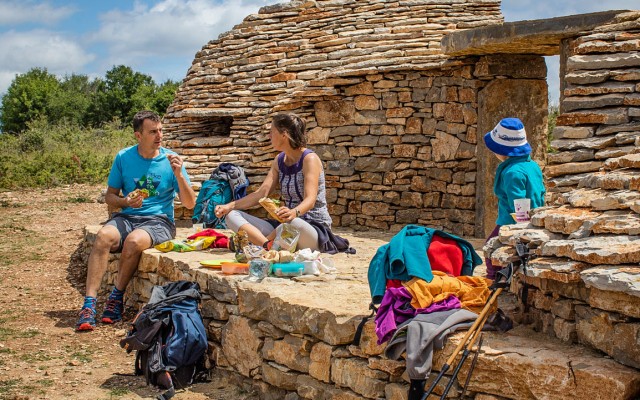
Restaurants are often difficult for a child who get easily overstimulated. Think of the waiting, unfamiliar food, loud voices, scraping chairs and little control over the situation. A picnic offers more peace and quiet. You decide on the place, the food and the pace. Bring familiar products and choose a place where your child can move around or retreat for a moment.

Causses du Quercy 1 Frankrijk Dordogne Lot vakantie wandelen natuur park naturel.jpg

Visit small villages outside peak times

Southern French villages are beautiful, but very busy in the summer. Villages such as Sarlat, Rocamadour, Collioure or Èze are popular. Therefore, go early in the morning or at the end of the afternoon. Choose one village a day and set a specific goal. For example:

  • Get an ice cream
  • Look at a fountain
  • Take ten photos
  • Buy a postcard

Avoid market days if your child doesn’t cope well with crowds. A market often involves a lot of noise, smells, people and unexpected movements.

Visit a garden or park

Botanical gardens, castle gardens and city parks are often more peaceful than museums, attractions or water parks. Look online beforehand for gardens with shade and benches. Don't turn it into an educational outing if your child isn’t up for it. Just walking, looking around, playing and taking breaks is enough.

Visit lavender fields or sunflower fields

In Provence, lavender fields attract many visitors, especially in June and July. However, such a trip can be peaceful if you choose a field away from the well-known spots and keep your visit short.

Be mindful of bees, bright sunshine, strong scents, and crowds at popular locations. For some children, this feels wonderful and special. For other children, it can quickly become overwhelming. Therefore, always build in a clear break or plan your return journey.

Deliberately plan an afternoon at your holiday home

An afternoon at your accommodation in the Dordogne might not sound like an activity, but for many children on the spectrum, this makes the holiday better. Let your child swim in your private pool, draw, read, build things, play video games or just play.

A quiet morning in a jacuzzi is also an example of a low-stimulus activity in the South of France. It often leaves them with more mental space and energy later in the day.

Espinet P12S vakantiepark kinderen Quillan  Languedoc Frankrijk.jpg

How can you recognize when your child is overstimulated?

It is almost impossible to predict when or if your child will become overstimulated during your holiday. Therefore, pay attention to these signs:

  • Your child suddenly becomes quieter, more distant or withdraws.
  • Your child, on the other hand, becomes more hyperactive, angrier, starts crying or has a tantrum.
  • Your child covers their ears or wants to get away from the situation.
  • Your child struggles with simple choices, such as deciding what to eat.
  • Your child seeks control: suddenly, everything has to be done in a specific way.
  • Your child complains of a headache, stomachache, tiredness or nausea.
  • Your child just wants to go home, to bed or to a quiet place.

Have you noticed that your child is becoming overstimulated? Offer them some noise-canceling headphones or arrange a quiet break. By responding in good time, you can often prevent intense emotions from arising.

FAQ's - Frequently asked questions about easily overstimulated children during your holiday in the South of France

Is overstimulation the same as a meltdown?

No. Overstimulation occurs when the brain has to process too many stimuli at once. A meltdown can result from this, but not everyone who becomes overstimulated will have a meltdown.

When is the quietest time to visit the South of France?

May, June and September are often quieter than the summer holidays. There are fewer tourists, the temperatures are usually more pleasant, and popular attractions are less crowded.

What items are useful to bring for a child who is easily overwhelmed?

Think of noise-cancelling headphones, their favorite cuddly toy or blanket, sunglasses, a cap, familiar toys, snacks and, if necessary, a weighted cuddly toy or weighted blanket if your child also uses one at home.

Is a campsite or a holiday home more suitable for a child who gets easily overwhelmed?

That depends on your child, but many families opt for a holiday home. You can set your own daily routine, have more privacy and can retreat more easily if necessary.

Are popular attractions always too busy?

No. Many popular places are much quieter early in the morning or late in the afternoon. By planning your visit carefully, you can avoid the worst of the crowds.

Do you need to adjust medication for ADHD or other conditions during your holiday?

Only adjust medication in consultation with your treating doctor. Take enough medication with you to last the whole holiday and store them as instructed, especially during hot summer days in the south of France.

A FranceComfort holiday home as a peaceful base

A peaceful place to stay often makes the holiday much more enjoyable for you and your child. You should therefore ideally choose a place away from busy nightlife areas, with a separate room for your child, air conditioning, plenty of peace and quiet and the option to cook for yourselves. A FranceComfort holiday home is the perfect fit. The accommodations are carefully furnished to ensure a comfortable stay. Your child will have their own room, you can cook whenever it suits you, and thanks to the private swimming pool, you can also still enjoy your holiday even if you decide to stay at the holiday home for an afternoon. Does that sound appealing?

View our holiday parks now   Book an accommodation   Discover the South of France