Rennes-le-Château: the mysterious village full of secrets in the South of France

Rennes-le-Château is a mysterious village in the South of France known worldwide for the mystery surrounding Pastor Bérenger Saunière and the Tour Magdala. Stories about hidden treasures, secret documents, the Cathars, and the Holy Grail have generated international interest for many years.

Why Rennes-le-Château attracts so many visitors

Deep in the hills of the Aude in southern France lies Rennes-le-Château, a small village that became known worldwide for one of France's greatest mysteries. Every year, thousands of people visit this remote village because of the stories about hidden treasures, secret documents, enigmatic symbols, and Father Bérenger Saunière. The secret of Rennes-le-Château has inspired books, documentaries, and conspiracy theories. It is often associated with the famous novel The Da Vinci Code.

Rennes-le-Château during a holiday in the Languedoc

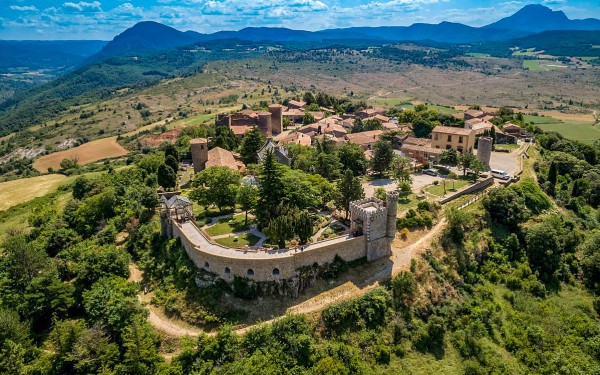
During a holiday in the Languedoc, Rennes-le-Château is a fascinating excursion for those who love history, mystery stories and impressive viewpoints. The village is situated on a hilltop between Limoux and Quillan and overlooks the green valleys of the South of France. The drive there alone, from your holiday home in the Languedoc, makes a visit special. Narrow roads wind through forests, vineyards and small French villages before you reach Rennes-le-Château.

Our parks in this region   Our houses in this region

The special atmosphere of Rennes-le-Château

Once at the top, you immediately notice that this is no ordinary French village. Everywhere there are references to the mystery surrounding Father Saunière, hidden treasures and secret societies. It is precisely this combination of history, legends and beautiful nature that makes Rennes-le-Château one of the most special places in the Languedoc.

If you are staying in the Quillan or Limoux region during your holiday in the South of France, Rennes-le-Château is one of the most special excursions in the area. You can drive there in a short time from a comfortable holiday home in France.

Where is Rennes-le-Château located?

Rennes-le-Château is in the Aude department in the Occitanie region of southern France. The village is situated between the towns of Limoux and Quillan, about an hour's drive from Carcassonne. Rennes-le-Château is easily accessible as a day trip from many holiday parks in the region.

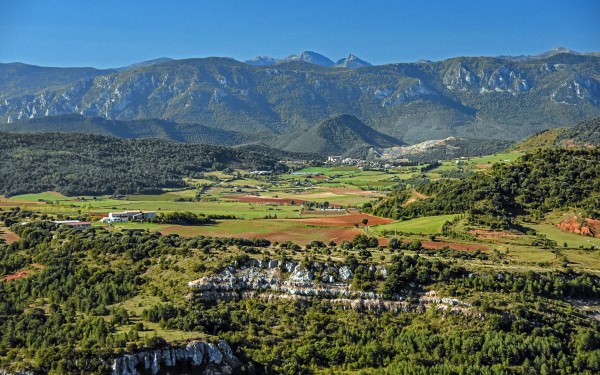
The village is situated on a ridge at an altitude of approximately 500 meters. Hence, Rennes-le-Château offers stunning views of the surrounding valleys and the foothills of the Pyrenees. The panoramas are particularly impressive in clear weather. The combination of rugged nature, quiet roads, and small mountain villages gives this area a unique character.

A visit to Rennes-le-Château can be easily combined with a visit to Carcassonne, for example. The famous fortified city is one of the best-known attractions in southern France and is on the UNESCO World Heritage List. Rennes-les-Bains is also popular due to the thermal springs and hiking trails in the surrounding area. You can find more information about other attractions in the region on the official French tourist website of pyreneesaudoises.

Which excursions can you combine with Rennes-le-Château?

Popular excursions around Rennes-le-Château

Many holidaymakers combine Rennes-le-Château with other tourist places and attractions in the region. The surroundings offer a beautiful variety of nature, history, mountain villages and mysterious legends.
Popular excursions around Rennes-le-Château include:

Rennes-le-Château as a day trip during your holiday

Rennes-le-Château is a good fit for a holiday in the Languedoc or the Pyrenees. In the region, you can enjoy beautiful hikingcycling and admire historic villages, viewpoints, nature reserves, as well as mountain landscapes.

Rennes-le-Château is particularly pleasant to visit during spring and autumn. Although it can be warmer in summer, thanks to its high-altitude location it usually remains more pleasant than the lower-lying parts of southern France.

The history of Rennes-le-Château before Saunière

Long before Father Saunière became world-famous, Rennes-le-Château already played an important role in the history of southern France. Due to its strategic location high above the valley, the village was an interesting place of defence for centuries. The Visigoths once lived in the area, and later the region formed part of the Cathar territory. A medieval fortress once stood on the hill near Rennes-le-Château, of which the remains are still visible. This combination of ancient history, legends, and hidden stories contributes to the mysterious atmosphere that still surrounds the village.

Rennes-le-Château in the land of the Cathars

Rennes-le-Château is situated in the heart of a region strongly connected to the history of the Cathars and ancient Occitanie. In the hills of the Aude, there are several fortresses and castles, hidden mountain villages and historical ruins that recall this special period in the history of southern France. The combination of rugged nature, ancient legends and mysterious history ensures that Rennes-le-Château fits perfectly within the mystical character of the Pyrenees and Cathar country.

You can find more information about the history of the Cathars and southern France on the official tourist website of Pays Cathare.

Why is the mystery of Rennes-le-Château so famous?

The mystery of Rennes-le-Château made this small mountain village famous worldwide. Central to the story is Father Bérenger Saunière, who served as the village priest from 1885 to 1917. When Saunière arrived in Rennes-le-Château, the village was poor and run-down. The church was in poor condition and there was hardly any money available for restoration. Yet, everything changed suddenly.

According to legend, while working in the church, Saunière discovered hidden documents or a treasure. Shortly thereafter, he suddenly possessed enormous wealth. He completely restored the church, had luxury buildings constructed and received guests from the highest circles of France. No one knew exactly where his money came from.

The unsolved mystery of Rennes-le-Château

It is precisely that enigma that has made Rennes-le-Château fascinating for over a hundred years. Some believe that Saunière found a hidden treasure. Others believe that he discovered secret documents with which he could blackmail influential people. Still, others look for the explanation in religious secrets, the Templars, the Holy Grail, or hidden knowledge of secret societies.

For many visitors, it is precisely that unsolved mystery that makes Rennes-le-Château so interesting. As you walk through the narrow streets, you look at details in the church, the tower, or the villa from ever-changing perspectives. Clues seem to be hidden everywhere. Even people who normally have little interest in mysteries are often captivated by the stories here.

The mystery of Rennes-le-Château and Pastor Bérenger Saunière

Bérenger Saunière was born in 1852 and was appointed pastor of Rennes-le-Château in 1885. At that time, the village had only a small number of inhabitants and the church was run-down.
With limited resources, Saunière began restorations of the village church. During these works, according to various stories, he is said to have found something special. Some speak of parchment scrolls with mysterious texts. Others believe that he discovered hidden gold or jewels.
What exactly happened has never been proven, but it is certain that Saunière suddenly had large sums of money at his disposal after the event.

The mysterious wealth of Saunière

That wealth was striking because a village pastor hardly earned anything at that time. Yet Saunière spent millions of euros on buildings, luxurious furnishings, works of art and extensive receptions for wealthy guests. For a simple village pastor, he lived a remarkably luxurious life. He organised dinners for visitors from upper French circles and invested large sums in expensive furniture, exotic plants and the construction of the gardens around Villa Bethania. His striking lifestyle eventually also led to questions and accusations from the Catholic Church.

The mystery was made even greater by the fact that Saunière never explained his wealth. The church authorities also received no clear answer. According to stories, even his bishop and other clergy were aware of a secret that could never be made public.

The secret after Saunière's death

When Saunière died in 1917, the mystery remained. His housekeeper, Marie Dénarnaud, inherited his possessions. She, too, lived a remarkably luxurious life for years for someone from a small mountain village. According to local stories, Marie was to reveal the secret on her deathbed, but shortly before that, she suffered a stroke. She passed away without ever giving an explanation. As a result, Rennes-le-Château remained surrounded by speculation and legends.
You can find more information about the history and the mystery of Rennes-le-Château on the official website of Rennes-le-Château.

To this day, the mystery of Rennes-le-Château has never been solved. Will you manage to solve it during your stay at holiday park FranceComfort – L’Espinet?

Theories about the mystery of Rennes-le-Château

Over the years, dozens of theories have emerged regarding Rennes-le-Château. Some stories are historical evidence-based, while others are more like legends and conspiracy theories. All these stories contribute to the unique appeal of the village.

A well-known theory suggests that Saunière found documents related to the ancestry of Jesus Christ. Other theories speak of hidden treasures of the Templars or the Visigoths. The Holy Grail is also frequently mentioned.

Secret societies and The Da Vinci Code

In Rennes-le-Château, some believe that the village is linked to secret societies such as the Freemasons or the Priory of Sion. International interest has grown enormously, especially since the publication of The Da Vinci Code.

Our parks in this region   Our houses in this region

What do historians say about Rennes-le-Château?

Historians point out that many stories are likely exaggerated or were added later. Nowadays, historians often believe that Saunière earned his money by selling masses and donations. Yet, there is no complete clarity. Nevertheless, Rennes-le-Château continues to fascinate people because no one can definitively prove what is true.

That makes a visit extra special. As you walk across the village square or step inside the church, you automatically wonder how many of the stories might contain a grain of truth.

You can read background information on the historical and mystical theories surrounding Rennes-le-Château on the Britannica encyclopedic website.

The mysterious church of Rennes-le-Château and the secret of Saunière

At the centre of the mystery is the church of Sainte-Marie-Madeleine. This church was completely restored by Saunière and contains all kinds of striking details that visitors still try to find an explanation for.

Upon entering, the Latin text above the entrance, “Terribilis est locus iste”, immediately catches the eye. It means: “This place is terrible” or “This place is awe-inspiring”. It is a remarkable text for a church and it strongly contributes to the mysterious atmosphere.

Striking symbols and mysterious details

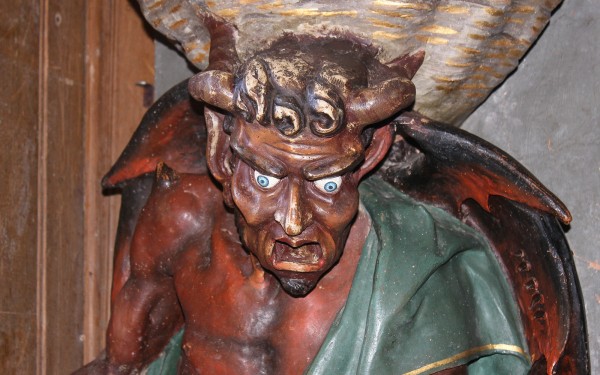
In the church of Rennes-le-Château, there is a statue of the demon Asmodeus next to the holy water font. This is exceptional in a Catholic church. Many visitors wonder why Saunière had this statue placed in that location.

The Stations of the Cross also contain striking details. Some images appear to deviate from traditional religious representations. According to researchers, there may be hidden clues incorporated in them.

Furthermore, visitors often point out:

  • mysterious symbols
  • unusual inscriptions
  • strange decorations
  • hidden meanings in stained-glass windows
  • unusual floor tiles

The floor in the Tour Magdala consists of 63 identical patterns with a black core. It is striking that number 64 has the same pattern but with a red core. According to some theories, this could have a hidden meaning, as the deviating stone appears to have been placed deliberately.

And what was written on the piece of parchment that was found in a pillar during restoration work, according to stories?

Rennes le chateau 4 frankrijk aude vakantiepark mysterie sauniere carcassonne languedoc.jpg

Why the church attracts so many visitors

No one knows whether these elements are truly part of a great secret. Nevertheless, they ensure that the church attracts thousands of curious visitors every year. You can easily drive there from the FranceComfort holiday homes.

Even for people who have little interest in conspiracy theories, the church remains an impressive place to visit due to its unique atmosphere and history.

Tour Magdala

Next to the church of Rennes-le-Château, Saunière had several buildings constructed, including the famous Tour Magdala. This Neo-Gothic tower stands on the edge of the village and offers views over the valleys of the Aude.

Saunière originally used the tower as a library and study. From the terrace surrounding the tower, you have a magnificent view of the surroundings. This view makes Tour Magdala one of the most beautiful spots in Rennes-le-Château.

On warm summer days, a special tranquillity hangs over this place. As you look out over the hills and distant mountain peaks, you immediately understand why this place has captured the imagination for decades. Especially around sunset, Tour Magdala is one of the most beautiful photo spots in the Aude. The blend of silence, nature and mystery sets Rennes-le-Château apart from many other tourist villages in the South of France.

A striking detail is that the tower's heavy metal door can only be locked from the inside. This, too, fueled stories about secrets and hidden documents.

Villa Bethania

Next to the tower, you can find Villa Bethania, the luxury villa that Saunière had built. For a simple village priest, this house was exceptionally large and luxurious. The building contained modern amenities that were rare in this region of France at the time. Some visitors see references to Masonic lodges and esoteric symbolism in the architecture. The blue ceiling with stars is mentioned particularly often.

Today, Villa Bethania and Tour Magdala are part of the museum complex of Rennes-le-Château. You can stroll through the gardens and enjoy the view of the Pyrenees and the green hills of Southern France.

Pic de Bugarach

Not far from Rennes-le-Château lies the Pic de Bugarach, a mountain that plays an important role in many mystical stories from the region. This mountain is known for its unique geological structure. The upper rock layers are older than the lower layers, which is relatively rare. As a result, the mountain has acquired an almost mysterious reputation.

Mystical stories around the Pic de Bugarach

Over the years, countless legends have arisen around the Pic de Bugarach. Some believe that hidden caves or secret passages exist there. Others think that the mountain possesses special energies.

Around 2012, the mountain attracted worldwide attention due to theories that the Pic de Bugarach would be a safe place during the alleged end of the world according to the Mayan calendar. These kinds of mythical stories contribute strongly to the mysterious atmosphere of the region around Rennes-le-Château.

Hiking and nature around the Pic de Bugarach

For holidaymakers, the surroundings are particularly wonderful due to the nature, hiking opportunities and panoramic views. From various routes, you have views of forests, valleys and the Pyrenees. Those who want an active holiday will find plenty of opportunities to hike, mountain bike and explore nature.
If you would like to know more about the unique geology and hiking opportunities around the Pic de Bugarach, please view the information from Parc naturel régional Corbières-Fenouillèdes.

Highlights during a walk through Rennes-le-Château

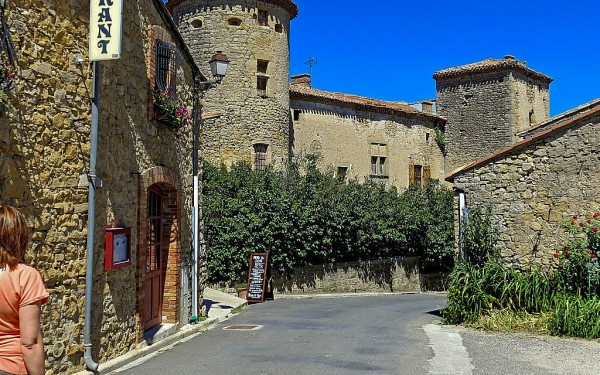
During a walk through Rennes-le-Château, you will continually discover new details that contribute to the village's unique atmosphere. From Tour Magdala, you have a magnificent view over the valleys and the Pyrenees. In the narrow streets, you walk past old stone houses, small squares and hidden vistas towards the hills. The cemetery next to the church also attracts many visitors due to the stories surrounding strange symbols and old graves. Additionally, the museum garden and the panoramic terrace are popular spots to quietly enjoy the view and the special atmosphere of Rennes-le-Château.

Visit Rennes-le-Château during your holiday

A visit to Rennes-le-Château can easily be combined with a holiday in the Languedoc. You can drive to the village from holiday homes and holiday parks in the south of France. The road up to Rennes-le-Château is narrow and winding but easily accessible by car. There are parking spaces at the top of the village. Because Rennes-le-Château is small, you can usually visit the village in a few hours.

Holiday feeling in the South of France

If you are staying in the region with children, there are many active excursions available in addition to culture and history. For example, look at the options for a holiday with children in the Languedoc.
After a visit to Rennes-le-Château, you can relax on a terrace in Quillan, visit a local market, or drive towards the Mediterranean Sea for a day by the sea.

Our parks in this region   Our houses in this region

What can you visit in Rennes-le-Château?

Despite the small size of the village, there is surprisingly much to see. During a visit to Rennes-le-Château, you can, among other things:

  • visit the Church of Sainte-Marie-Madeleine
  • view the Tour Magdala
  • walk through the Saunière Gardens
  • see Villa Bethania
  • visit the museum
  • enjoy viewpoints over the valleys
  • stroll through the narrow streets
  • view the cemetery, where various mysterious references are said to be located

The vibe of Rennes-le-Château makes the visit special. Even visitors who do not believe much in the legends find the village interesting due to the mix of history, nature and mystery.
Additionally, it is a relatively quiet destination compared to busier tourist places in the South of France. A special silence hangs over the village, especially in the early mornings and late afternoons.

Day trip to Rennes-le-Château from Quillan

From Quillan, you drive about 20 minutes to Rennes-le-Château via winding mountain roads. Along the way, you have beautiful views of the hills and valleys of the Aude. Many holidaymakers combine a visit to the mysterious village with lunch on a terrace in Quillan, before heading towards Rennes-le-Château. Especially in the late afternoon, when the warm sunlight falls over the Pyrenees and the green valleys, there is a special atmosphere around Tour Magdala.

An example of a day itinerary:

  • morning- Carcassonne
  • lunch- Quillan
  • afternoon- Rennes-le-Château
  • sunset- Tour Magdala

The South of France atmosphere around Rennes-le-Château

What makes Rennes-le-Château extra special during a holiday in France is the combination of mystery and southern French atmosphere. On the way to the village, you drive past vineyards, small village squares and old stone houses. At markets, you smell lavender, herbs and fresh bread. In the surrounding area, you will find quiet terraces where you can enjoy a leisurely lunch with a view of the hills.

It is precisely this variety that makes the region attractive. One day you visit mysterious places and old castles, the next day you hike through nature or enjoy a market in a French village. Additionally, the region is a convenient location for day trips to cities such as Toulouse and Perpignan.

Why Rennes-le-Château remains so popular

The unique thing about Rennes-le-Château is that no one knows exactly what the truth is. Did Saunière really find treasure? Was that treasure regarding secret documents? Were there religious secrets or a clever fraud involved? Or did a small local story eventually grow into a world-famous legend?
Since there is no definitive answer, Rennes-le-Château continues to fascinate people.

The unique atmosphere of the village aids this. The combination of old stone buildings, mysterious symbols, views of the Pyrenees, and stories about hidden secrets makes Rennes-le-Château feel different from many other villages in France.

Even visitors who normally have little interest in mysteries often become curious the moment they walk through the village.

Editors of this article

This article was created by the travel advisors at FranceComfort based on tourist information, tips from park managers and residents, and guest experiences.

Practical information for your visit to Rennes-le-Château

In Rennes-le-Château, parking is available on the outskirts of the village. There is usually an entrance fee for Tour Magdala, Villa Bethania and the museum complex. Actual opening hours and prices may vary by season. Most visitors keep approximately two to four hours for a visit to Rennes-le-Château.

Since the village is situated on a hill, some streets are steep. There are several flights of stairs between the church, the tower and the viewpoints. Therefore, good walking shoes are recommended, especially during hot summer days. Please remember to bring plenty of water and sunscreen.

What is the best time to visit Rennes-le-Château?

The village can be busier in July and August. If you wish to visit Rennes-le-Château in peace and quiet, spring, autumn, and periods outside of school holidays are often the most pleasant. The morning or late afternoon are also popular times due to the quieter atmosphere and the beautiful view over the valleys.

FAQ about Rennes-le-Château

1. Has the mystery of Rennes-le-Château ever been solved?

No, to this day there is no official explanation for Father Saunière's wealth. As a result, many theories persist.

2. Who was Bérenger Saunière?

Bérenger Saunière was the parish priest of Rennes-le-Château between 1885 and 1917. He became world-famous for the mysterious fortune he suddenly possessed.

3. Can you visit Tour Magdala?

Yes, Tour Magdala is part of the Rennes-le-Château museum complex and can be visited during opening hours.

4. Is Rennes-le-Château based on The Da Vinci Code?

The village and the mystery surrounding Saunière are often linked to Dan Brown's The Da Vinci Code. Several themes in the book seem to be inspired by stories surrounding Rennes-le-Château.

5. How long does a visit to Rennes-le-Château take?

Most visitors allocate about two to four hours for a visit to the village, the church and the museum.

6. Is Rennes-le-Château suitable as a day trip?

Yes, Rennes-le-Château is a popular day trip during a holiday in the Languedoc or southern France.

7. Is Rennes-le-Château suitable for visiting with children?

Yes, especially children who love exciting stories, castles and mysteries. They often find Rennes-le-Château interesting. The village is small and manageable with kids, and easy to combine with other excursions in the region.

8. How long is the drive from Carcassonne to Rennes-le-Château?

From Carcassonne, it takes about 1 hour to drive to Rennes-le-Château via Limoux and the hills of the Aude.

9. Is Tour Magdala free to visit?

No, you usually pay an entrance fee for Tour Magdala and the museum complex. This gives you access to the tower, the church and Villa Bethania (among other things).

Book your holiday to the Languedoc

Do you want to discover for yourself why Rennes-le-Château has captured the imagination for over a century? During a holiday in France, you can combine mysterious villages, impressive nature, historic castles and charming French towns. From a comfortable holiday home or one of the luxury holiday parks in France, you can easily discover the most beautiful places in the South of France. From this region, you can easily discover Rennes-le-Château, Tour Magdala and the mysterious history of the South of France.

Our parks in this region   Our houses in this region   Order Environmental Sticker   Order Toll Badge

Back to the overview